
Feeling Lost After Achieving a Goal: 4 Steps to Reconnect With Your Bigger Vision

Summary:
Feeling Lost After Achieving a Goal (And 4 Steps to Reconnect With Your Bigger Vision)
Feeling lost after achieving a goal is more common than most people admit, and it has almost nothing to do with whether the goal was worth pursuing. After months or years of focused effort, the finish line can feel surprisingly flat. When the bigger vision fades and the milestone becomes the only focus, success can feel disorienting instead of fulfilling.
In this post you will learn:
- Why big goals can slowly shrink into survival tasks when we lose connection to the larger vision
- Why finishing a milestone does not automatically create fulfillment
- Why success can feel confusing or empty without a life vision to return to
- Why high achievers are often the most vulnerable to this experience
- The neuroscience behind why the brain struggles after completion
- The four steps that help restore direction, identity growth, and emotional connection after success
Feeling lost after achieving a goal is not a sign that something went wrong. It is a sign that the milestone was completed but the larger vision it was meant to serve was not maintained alongside it. Reconnecting with that vision is what transforms achievement from an ending into a beginning.
“There is no point in achieving success if you lose yourself in the process.”
— Eckhart Tolle
The Moment It Hit Me
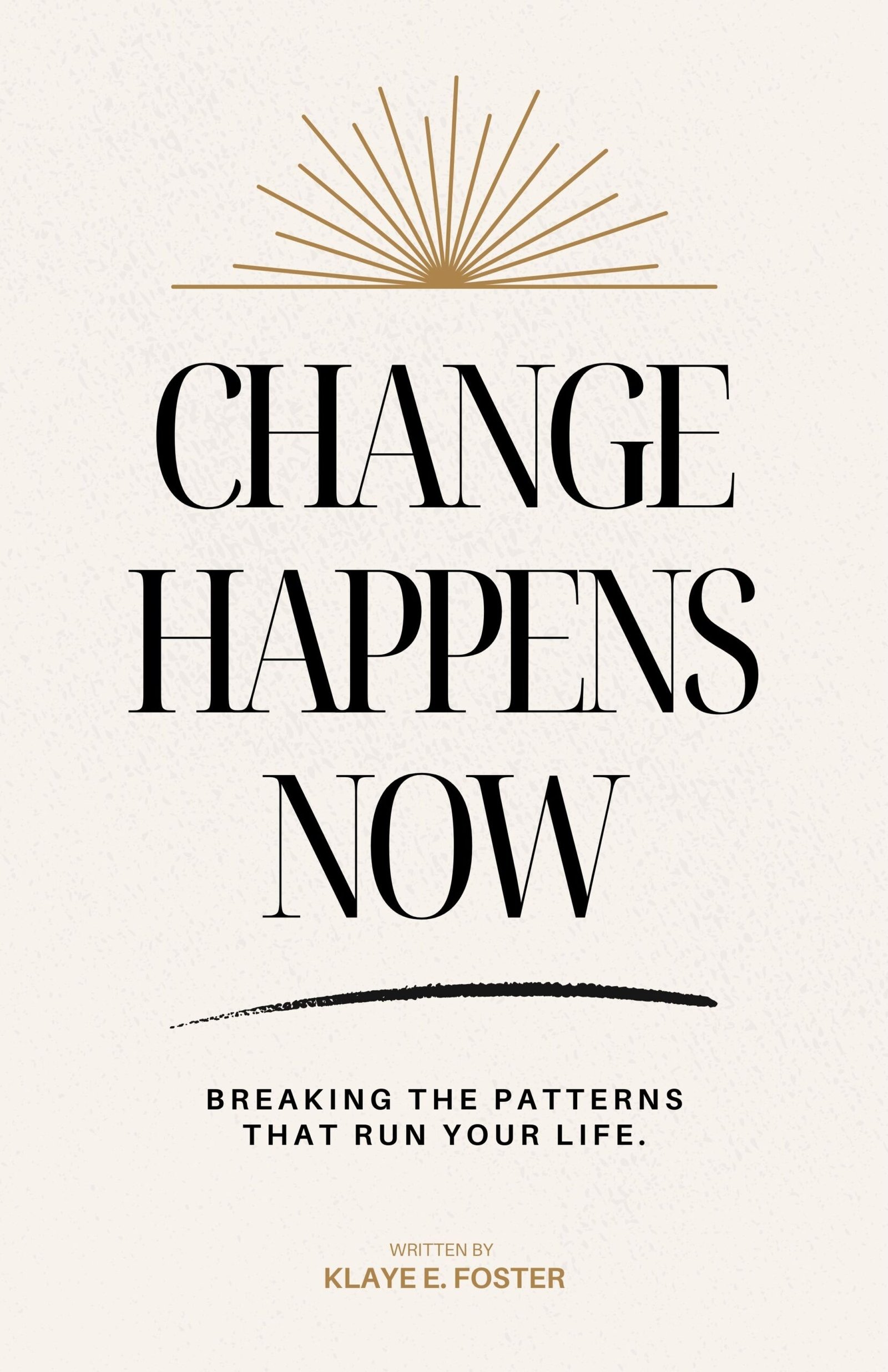
I spent a long time finishing my book, Change Happens Now. Much longer than I expected or planned, and honestly, much longer than I wanted it to take.
When I first imagined writing it, I was not just thinking about finishing a manuscript. I could clearly see what my life would look like on the other side. Traveling the world. Speaking on stages. Running workshops. Having real conversations with people who were trying to break habits that felt impossible to change. Building a life where creativity, teaching, and mindfulness were not separate pieces but one unified path.
That vision was vivid and emotional. I could feel it almost physically, the way you can feel the wind before it reaches you.
Then reality showed up.
Writing a book is slow work. It is quiet and repetitive. Full of rewriting, doubting, reorganizing, deleting entire sections, and starting all over again. Somewhere in that process, the vision I had for myself slowly faded into something much smaller. The goal stopped being the life I was building toward. The focus narrowed to simply finishing the book.
And when it was finally finished, something unexpected happened.
Instead of feeling clear and energized, I felt disconnected. I was sitting alone in my hotel room in Da Nang, Vietnam, the kind of place I had imagined being when I pictured the life that came after the book, and the thought running through my head was not triumphant. It was quiet and unsettling: what am I supposed to do now?
On paper I knew the next steps. Promote the book. Build out the blog. Start making connections. Technically I knew exactly what needed to happen. Emotionally, I could not feel any of it. There was no excitement, no relief, no surge of momentum. Just a strange emptiness and a loneliness I had not been prepared for.
I had crossed a finish line and somehow lost sight of why I had started running.
Why Do People Feel Lost After Achieving a Goal?
Most people expect achievement to feel like arrival. Like everything that was unclear before will suddenly make sense. But that is rarely how it works.
When we spend a significant amount of time working toward a specific goal, a quiet shift happens. The goal that was originally a vehicle for something bigger gradually becomes the entire focus. Progress gets measured through checklists. Identity gets tied to the work itself. The emotional and lifestyle vision that originally started the whole thing fades into the background, replaced by the discipline required to keep moving forward.
This experience is sometimes called post achievement depression, and it is more widely recognized now than it used to be. It is not a sign that the goal was wrong or that something failed. It is what happens when the milestone completes but the connection to the life it was meant to build has not been maintained.
The brain, which has been running on the anticipation of completion, suddenly has no clear next signal to follow. The forward pull disappears. And in that space, disorientation fills in.
Why High Achievers Are Most Vulnerable to This
There is an irony here that is worth naming: the people who work the hardest and push the furthest are often the ones hit hardest by this experience.
High achievers tend to be exceptionally good at focusing. They can narrow their attention, block out distraction, and sustain effort over long periods of time. Those are real skills. But applied to a single goal over a long stretch, that same focus can become a kind of tunnel vision. Everything outside the goal, including the vision the goal was originally meant to serve, gets filtered out as noise.
The more you care about finishing something, the more completely your identity can become wrapped up in the process of finishing it. So when it is done, the question “who am I now?” is not abstract. It is immediate and uncomfortable.
This is also why people who achieve significant milestones sometimes feel less fulfilled than people around them expect them to feel. From the outside, it looks like success. From the inside, it can feel like standing in a room after a party where everyone has gone home, not quite sure what to do with the quiet.
This does not mean something went wrong. It often means you were committed enough to finish. The real work begins when you reconnect with the bigger vision.


The Hidden Trap Behind Feeling Lost After Achieving a Goal
Most of us believe motivation comes from achieving goals. That sounds logical, but it misses something important. Goals are milestones, not destinations.
When we attach our identity to finishing one goal, we unintentionally shrink our vision to the size of that task. The emotional fuel that originally powered us gets replaced over time by discipline and obligation. Discipline is important and necessary. But discipline without vision eventually starts to feel heavy and directionless.
The longer a project lasts, the easier it becomes to forget the emotional and lifestyle meaning behind it. The mind shifts into productivity mode and progress gets measured through output rather than alignment. You stop asking whether this still connects to the life you want. You just keep moving.
That narrowing is invisible while it is happening. You only really feel it when the work stops.
Achievement Vision vs Life Vision
One of the most useful distinctions I have found when working through this is the difference between an achievement vision and a life vision.
An achievement vision is focused on completing something specific. Finish the book. Launch the business. Hit the revenue goal. Cross the line. It is concrete, measurable, and has a clear end point. That clarity is what makes it useful for driving effort.
A life vision is different in kind. It is focused on who you become and how your daily life actually feels on the other side of completion. It asks questions like: how do I want my time to feel once this exists? How do I interact with people? What kind of environment am I building around my work? Who am I becoming as this grows?
The achievement vision gets you through the work. The life vision is the reason the work was worth doing in the first place.
When I was in the middle of writing the book, I had the achievement vision locked in tight. The life vision had quietly dropped away. What I sat with in that hotel room in Da Nang was not the absence of a next goal. It was the absence of the feeling that any of it was connected to the life I had originally imagined.
The reconnection, when it came, was not about finding a new project. It was about returning to the questions the life vision asks.

4 Steps to Reconnect With Your Bigger Vision After Success
Step 1: Revisit Your Emotional Why
Instead of asking why the goal mattered professionally or strategically, ask why it mattered emotionally and personally. What kind of life did you imagine living because this existed? What kind of freedom, expression, or impact did you picture when you first decided this was worth doing?
Spend real time with this. Not a five-minute journal entry but an actual sit-down with the question. Imagine the life in detail. What does a normal day look like? How does it feel? The more vivid you can make it, the more useful it becomes as a reference point for direction.
Step 2: Expand the Identity That Finished the Goal
Finishing something is not proof that you are done growing. It is proof that your capacity has expanded. The person who completed that goal is not the same person who started it, even if the difference is hard to see from the inside.
A useful question to sit with: if I was capable of finishing this, what version of me exists now that did not exist before? What can that person do, offer, or build that the earlier version could not?
That version of yourself is the real reward. The milestone simply revealed it.
Step 3: Design Life After the Finish Line
Most people plan carefully how to reach a goal and barely think at all about what happens after. This is where the emptiness tends to collect, in the undesigned space on the other side of completion.
Take some time to write out what you actually want the next chapter to look like. How do I want a normal day to feel now? What opportunities am I open to? What environments do I want to work in? How do I want to share what I have built with others? These are not small questions, but they are the ones that fill the vacuum that achievement leaves behind.
Step 4: Treat Each Goal as a Doorway, Not a Destination
Every meaningful goal is an invitation into a new layer of identity. If you treat it as an ending, growth feels temporary and success feels like subtraction. If you treat it as a doorway, growth becomes continuous and each completion points toward something larger.
For me, the book was never meant to be the final product. It was always a bridge into conversations, workshops, teaching, and the kind of deeper personal development work that cannot happen without something real to stand behind. The moment I reconnected to that, the flatness started to lift. Not because a new goal appeared but because the goal I had already achieved finally felt like it meant something again.
Holding the Step and the Skyline
The step keeps you grounded. The skyline keeps you inspired. Without the step, nothing gets built. Without the skyline, you forget why you are building in the first place.
Losing connection to the vision is not failure. Sometimes it just means you outgrew the version of the vision you started with, which is actually a sign that the work did what it was supposed to do.
Finishing something meaningful is not the end of a chapter. It is proof that you are capable of living the life you once imagined.
The real question, once you can see that clearly, is what does that life look like from here?
Frequently Asked Questions
Why do I feel lost after achieving a goal?
Because your focus shifted entirely toward completion and the life vision behind the goal faded in the process. Once the milestone is reached, the forward pull disappears and the brain has no clear next signal to follow. This is not a personal failure. It is what happens when the finish line becomes the whole point.
What is post achievement depression?
Post achievement depression is the experience of emptiness, disconnection, or low motivation that can follow the completion of a significant goal. It is more common than most people realize and is particularly prevalent after long projects that required sustained focus and sacrifice. It typically reflects a loss of direction and identity rather than a problem with the achievement itself.
Why do I feel empty after reaching a big goal?
Because the goal was likely carrying more psychological weight than just the task itself. Your identity, your sense of progress, and your daily sense of purpose were all organized around it. When it finishes, all of that reorganizes at once, which can feel like emptiness even when things are objectively going well.
How do I find purpose after achieving a goal?
By returning to the life vision behind the goal rather than immediately searching for a new milestone to replace it. Ask what kind of life you imagined living because this existed, and start designing toward that. The purpose was always the larger picture, not the goal itself.
Can feeling lost after success be a sign of growth?
Yes, often. If the version of you that finished the goal is significantly different from the version that started it, some disorientation is natural. You have outgrown a previous version of yourself and have not yet fully inhabited the next one. That in-between feeling is uncomfortable but it is not a problem. It is the gap that growth lives in.
How often should I revisit my long-term vision?
Every few months during long projects, and intentionally at the completion of any major milestone. Vision has a shelf life. The version you started with may not fit the version of you that is finishing. Regular check-ins prevent the drift that leads to feeling lost on the other side of success.
Is it bad if my vision changes after reaching a goal?
Not at all. Vision that shifts after a significant achievement usually signals that the work changed you in ways you had not fully anticipated. That is not deviation from the path. That is the path doing its job.
Final Thought
Most people treat achievement as the destination and are quietly unprepared for what comes after it. The finish line is real, but it is not the end of anything. It is the opening of something that requires a different kind of attention than the work that brought you there. You do not need a new goal immediately. You need to remember why the last one mattered, and let that memory point toward what comes next.
“There is no point in achieving success if you lose yourself in the process.” — Eckhart Tolle
Eckhart Tolle is a spiritual teacher and author best known for The Power of Now and A New Earth. His work centers on present-moment awareness and the nature of identity. This line cuts directly to the tension at the heart of post achievement emptiness: success that costs you your sense of self is not the kind of success that fulfills. The process of reconnecting after achievement is, at its core, a process of returning to yourself.