


7 Micro Habits That Actually Work (And How to Build Them Starting Today)

Summary: 7 Micro Habits That Actually Work (And How to Build Them Starting Today)
Change attempts tend to collapse not because of bad intentions, but because the starting place was too big for the habit pattern to actually take hold.
Micro habits work differently. They are small enough to repeat consistently, which is what allows them to eventually start to run on their own. The value is not in the size of the action. It is in what consistent repetition builds over time.
In this post, we’ll explore:
- What micro habits are and why they work
- How the brain actually installs new behavior
- How to choose the right micro habit for where you are now
- 7 micro habit examples you can start today
- Common mistakes that keep habits from sticking
- How to know when it’s time to scale up
A micro habit is the smallest executable version of a behavior you want to build. When repeated consistently in the same context, small actions accumulate into patterns that eventually run without needing constant effort or attention.
"Every action you take is a vote for the type of person you wish to become."
— James Clear, Atomic Habits
What Micro Habits Are
A micro habit is the smallest functional version of a behavior you want to build.
It’s the minimum effective action, small enough that starting costs almost no effort, but real enough that it begins to build a pattern when repeated.
The most common illustration is someone who wants to start exercising. Instead of “work out for an hour,” a micro habit might be putting on your workout clothes. That’s it. The action takes thirty seconds, the barrier is low enough that resistance barely has a foothold, and doing it creates the beginning of a repetition loop.
The power is not in what the action accomplishes on its own. It’s in what the brain does with it over time.
Micro habits are sometimes called tiny habits, atomic habits, or habit seeds. The language varies, but the underlying idea is consistent: start smaller than feels necessary, remove the friction, and let repetition do the work.
Why Micro Habits Work
When a behavior is repeated in a consistent context, the brain begins to recognize it as something familiar. Familiarity reduces resistance and makes the next repetition easier. That accumulation is exactly what builds lasting habits.
Neuroscience research on habit formation helps explain why this happens. The basal ganglia, a set of structures in the brain associated with motor control and learning, play a central role in how goal-directed actions become automatic over time. As a behavior is repeated, the brain gradually transfers control away from the prefrontal cortex, which handles conscious decision-making, and toward the basal ganglia allowing the action to be executed with less cognitive effort. This process has been well-documented in peer-reviewed research, including work published by the National Institutes of Health.
What this means practically is that the brain is not looking for impressive starts. It is looking for repetition and low resistance. An action performed consistently over time eventually stops feeling like something that requires a decision. It starts to feel like what you do.
Micro habits make that repetition possible because the cost of doing them is low enough to continue even when energy, motivation, and enthusiasm are all running thin. And that is exactly when most habits fall apart.
Micro Habits vs. Big Goals
There is nothing wrong with having a large goal. The issue is treating the goal itself as the unit of action.
“Get fit” is not an action. “Read more” is not an action. They are directions. They do not tell you what to do today when the schedule is full and the energy is low.
Micro habits sit at the other end of the spectrum. They are specific, they are small, and they can be executed right now. The goal stays in the background as the direction. The micro habit is what actually gets done.
This is also where large goals tend to create problems early on. The distance between the current state and the goal is visible before any progress is made. That gap can create discouragement and make the large goal feel overwhelming before the habit has had time to form at all. Micro habits close that gap by creating real movement from the first day, small in scale but real in repetition.
The goal tells you where you are going. The micro habit tells you what the next step is. Both matter, but only one of them can be taken right now.

How to Choose the Right Micro Habit
The most important quality of a good micro habit is that it is nearly impossible to skip.
To choose well, run it through these four questions:
1. Is it specific enough to do in one motion? The more specific the action, the less room there is for negotiation when the moment arrives. “Drink a glass of water when I wake up” is specific. “Be healthier” is not.
2. Can it attach to something that already happens? Attaching a new behavior to an existing one gives the new action a built-in trigger. This is sometimes called habit stacking. You already make coffee in the morning. Two minutes of quiet while it brews requires no extra time and no extra decision. The existing routine becomes the cue.
3. Is it small enough that skipping it would feel harder to justify than doing it? This sounds counterintuitive, but it is the right test. When the habit is that small, the internal negotiation disappears. There is no real argument for skipping something that takes sixty seconds.
4. Does it point in the direction you actually want to go? The action does not need to be impressive. It needs to be aligned. One page of writing a day is not a writing career on its own, but it is pointed toward one. The direction matters more than the scale at this stage.
7 Micro Habit Examples You Can Start Today
These are not prescriptions. They are illustrations of what a workable micro habit looks like across different areas of life. Use them as starting points, not instructions.
1. Two minutes of stillness before checking your phone in the morning. Before the scroll begins, sit with the day for a moment and just be present. No agenda or technique required. This one habit changes the quality of attention you bring to the first hour.
2. Ten bodyweight squats after your morning coffee. No gym, no equipment, no commute. A small movement pattern attached to something you already do every day. It builds the groove of showing up without requiring a full workout.
3. One intentional breath before you start eating. Takes two seconds. Begins to build a pause between automatic behavior and conscious presence. Over time, that pause shows up in other areas too.
4. Three things that happened today, written before bed. Not necessarily a gratitude list, though that works too. Just three things that stood out from the day. It trains attention toward evidence of what is actually happening rather than defaulting to what went wrong. This connects to Step 10 of The Change System, grounded gratitude, which is about training attention toward progress rather than only noticing what is missing.
5. One page of reading before sleep. One page, not a chapter. The goal is to make the action easy enough to do even when tired. The habit lives in the repetition, not the volume.
6. One intentional message sent each day. A short note, a genuine check-in, a specific appreciation. One. It compounds quietly in ways that are hard to measure but easy to feel over time.
7. Ask “what am I feeling right now?” once a day. No journaling or processing. Just the question, asked and sat with for a moment. Over time, the practice of noticing builds a gap between feeling and reaction, which is where most meaningful choices happen. This connects directly to Step 5 of The Change System: emotional workability.
How to Make Micro Habits Stick
Choosing the right habit is one part of the process. Building the conditions for it to repeat is the other.
Attach it to something that already exists. The most reliable way to ensure a micro habit repeats is to anchor it to an established behavior. If there is already a morning routine, the micro habit belongs there. If a certain time of day is already consistent, that is when it happens. The existing routine does the work of remembering.
Remove the friction before the moment arrives. If the habit requires preparation, move the preparation earlier. Put the book on the pillow. Set the glass of water on the counter the night before. The fewer steps between the intention and the action, the more likely the action continues. This is the core of Step 4 in The Change System, environmental design, which is about structuring your surroundings to reduce friction on the behaviors you want.
Use a cue in the early days. Memory alone is not enough in the beginning. A visual reminder, a phone notification, or an object placed deliberately bridges the gap between intention and action until the repetition loop is established.
Let it be imperfect. A missed day is not a broken habit. The habit exists in the pattern, not in any single instance. The problem is not the missed day itself. It is the interpretation that follows, the story that says one gap means the whole thing has fallen apart. It does not. Consistency does not require perfection. It requires continuation.

Common Mistakes to Avoid
Starting with more than one new habit at a time. This is how habit systems collapse. The intention is understandable, several things feel ready to change at once, but the brain can only install new patterns one reliable repetition at a time. One habit, allowed to stabilize, before the next is added.
Making the habit too ambitious too soon. The habit that feels easy today is the one that still exists in three months. The habit that feels challenging today is the one that gets abandoned in two weeks. Sustainable change does not look impressive at the start. That is the point.
Treating missed days as evidence of failure. A missed day is information. It usually means the cue was not reliable, or the habit was placed at the wrong moment in the day. The right response is to adjust the design, not to reinterpret your character.
Measuring results too early. Micro habits work through accumulation. In the early days, nothing visible is happening. The brain is simply beginning to recognize the pattern as something worth storing. The results show up later, not at the two-week mark.
Disconnecting the habit from anything meaningful. A micro habit that is not pointed toward something real will feel arbitrary over time. It does not need to be tied to a grand vision, but it should connect to something that actually matters. That connection is what keeps it relevant after the novelty fades.
A Note From Experience
For a long time, I had wanted to start a meditation practice. But the idea of sitting still for twenty minutes or more every day felt like too large a commitment for me to actually begin. So I kept putting it off, waiting until I had more time, more readiness, or more of whatever I thought I needed.
Eventually I got the idea to stop trying to start meditating and just start sitting still for a couple of minutes at a time.
Every day at the same time, I would get into a seated position and stay there for two or three minutes. No meditation techniques or breath work. I wasn’t meditating. I was just sitting still and trying not to move. That was the whole thing.
What happened over the following weeks surprised me. The act of just sitting still started to feel natural. The resistance I had built up around the idea of meditating began to dissolve, partly because I was not calling it meditation, and partly because I was actually doing it every day. Two or three minutes became five. Five became ten. At some point I stopped counting and started actually practicing.
Now I can sit and meditate for over an hour without discomfort. That capacity did not come from committing to an hour. It came from committing to a seated position for a few minutes a day and letting the rest follow.
The starting point was that small. And that smallness was exactly the reason it worked.
When to Scale Up
Micro habits are not the destination, but the foundation.
Once a behavior has been repeated enough times to feel automatic and you do it without much thought, skipping it starts to feel more unusual than actually doing it. That is the signal to expand. Not by adding ten new habits at once, but by gently increasing the scope of the one that has taken hold.
The two-minute stillness practice becomes five. The one page becomes a chapter. The ten squats become a full 40 minute work out.
There is also a more subtle signal worth paying attention to. When you start to identify with the behavior rather than just perform it. When you stop convincing yourself to do it and it begins to feel like what you do. That shift from effort to identity is how you know the foundation is real. The post Why Change Doesn’t Last explores this transition in more depth for anyone who wants to follow that thread further.
Frequently Asked Questions
What is a micro habit?
A micro habit is the smallest executable version of a behavior you want to build. It is specific, low-effort, and designed to be repeated consistently rather than performed at a high level.
How long does it take for a micro habit to become automatic?
It depends on the behavior and how consistently it is repeated. Research suggests that habit formation timelines vary widely. What matters more than a specific number of days is continuity over time in a consistent context.
How many micro habits should I start with?
One. The goal is to create a reliable repetition loop for one behavior before adding another. Starting with several at once is the most common reason habit systems fall apart.
What is the difference between a micro habit and a tiny habit?
The concepts are closely related. BJ Fogg’s Tiny Habits framework uses similar principles around anchoring small behaviors to existing routines. Micro habits are part of the same family of ideas. The core principle is the same: reduce scale, increase repetition, and build from there.
Can micro habits lead to real, significant change?
Yes, through accumulation rather than through any single action. The value is in what consistent repetition builds over weeks and months.
What if I keep forgetting to do my micro habit?
This is a design issue. Add a reliable cue, such as an object placed somewhere visible, a notification, or a habit stack attached to something you already do. The habit is only as consistent as its trigger.
Final Thoughts
The scale of the action does not determine the significance of the result. The continuity does.
A single micro habit, repeated in a consistent context, over enough time, becomes the kind of behavior that runs without needing to be managed. And once one pattern is stable, it creates the conditions for the next one.
This is not a slow approach. It is the actual approach. The one that will hold over time.
Ready to Go Deeper?
Micro habits address behavior at the surface level. But lasting change also requires working with what drives behavior underneath, the patterns of attention, belief, and emotional response that shape decisions before you are even aware they are happening.
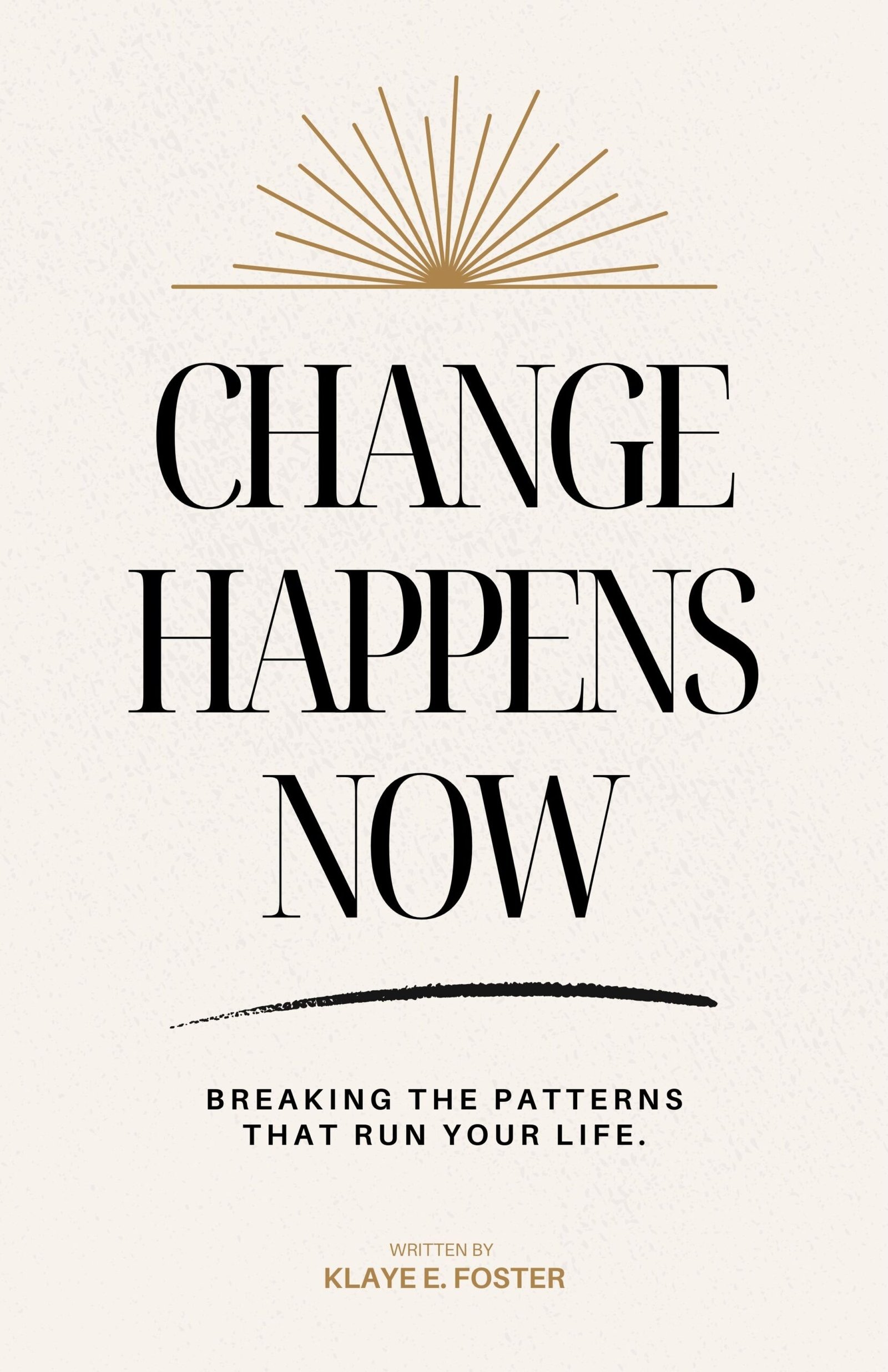
Change Happens Now is the full framework. It introduces all 10 steps of The Change System and explains how to work with behavior change at every level, from the earliest stage of awareness through to the habits and inner stability that make progress sustainable over time.
If you want to understand not just what to do, but why your patterns work the way they do and how to change them at the root, this is where to begin.