



Understanding How Your Environment Affects Your Behavior (And How to Use It to Your Advantage)
Summary: How Your Environment Affects Your Behavior (And How to Use It to Your Advantage)
Understanding how your environment affects your behavior is one of the most practical things you can do if you are trying to build better habits or create lasting change. Your environment shapes behavior more than motivation or discipline because it constantly influences what actions feel easy, obvious, or automatic. The spaces you move through, the objects around you, and the people you spend time with all guide what you do without requiring conscious thought.
Most behavior is cue-driven, which means your surroundings are always shaping your decisions, even when you don’t notice it. This is why relying on willpower alone often fails. When your environment works against you, every action requires effort. When it supports you, consistency becomes easier.
In this post, we’ll explore:
- How environment affects behavior without you realizing it
- Why willpower alone is not enough to create change
- How small environmental changes influence your actions
- How your social environment shapes what feels normal
- How to design your environment so it supports your direction
Your environment shapes behavior by creating cues that trigger actions and reduce decision-making. Changing your surroundings is one of the most effective ways to make consistent behavior easier to maintain.
“If our environment is working against us, we are constantly using willpower to fight what is around us.”
Why We Underestimate How Your Environment Affects Behavior
When we think about changing our behavior, we tend to focus inward. We look at our mindset, our habits, and our level of discipline, assuming that if we can just think differently or try harder, everything else will fall into place.
What we often overlook is how much of our behavior is shaped by our environment.
The layout of our space, the accessibility of certain choices, the people we are around consistently, and the cues we are exposed to all influence what we end up doing. These environmental influences are subtle, which is exactly why they are easy to ignore. They do not demand attention, but they quietly guide behavior in the background.
Over time, those small influences add up. What feels like personal choice is often a response to what is immediately available, visible, and reinforced. Even when we believe we are making independent decisions, those decisions are being shaped by our surroundings in ways we rarely stop to examine.
How Your Environment Quietly Shapes Behavior
Behavioral psychology shows that much of what we do is cue-driven, meaning that our actions are often responses to what is directly in front of us.
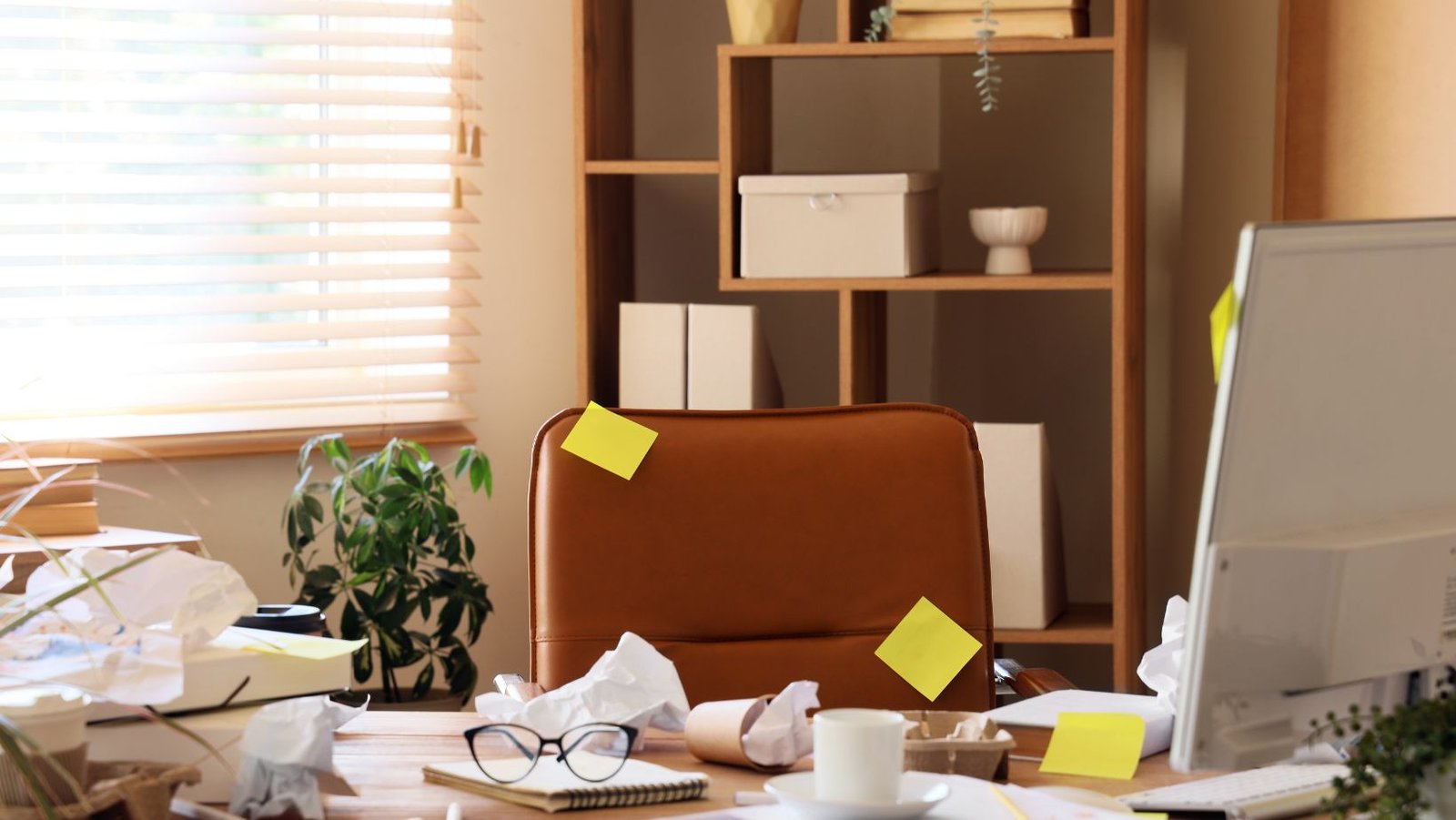
A phone within reach gets picked up more often than one across the room. Food that is visible is more likely to be eaten than food that is put away. A workspace that is cluttered creates resistance, while a space that is clean and prepared makes it easier to begin.
These are not dramatic differences, but they are consistent ones, and consistency is what shapes behavior over time.
From a neurological standpoint, the brain is constantly scanning for cues that signal what action to take next. These habit cues reduce the need for conscious decision-making. When the cues are consistent, behavior becomes easier to repeat. This is how environment shapes behavior in everyday life. It is not forcing action, but it is constantly guiding it through context-dependent behavior, a pattern where the environment itself becomes a trigger.
Why Willpower Alone Does Not Work
It is easy to believe that we should be able to override our environment with enough discipline. We tell ourselves that we just need to be stronger, more focused, or more committed. But willpower is limited.
Research in cognitive psychology suggests that self-control operates like a finite resource. The more decisions we make and the more resistance we apply throughout the day, the more that resource becomes depleted. This is why it becomes harder to stay focused, make good decisions, or resist distractions as the day goes on.
If our environment is working against us, we are constantly using willpower to fight what is around us. That creates a cycle where effort is required just to maintain baseline behavior. That is not sustainable.
The goal is not to rely on willpower. The goal is to reduce the need for it by aligning your environment with the behavior you are trying to maintain. Environmental design is not about making yourself do more. It is about making the right thing easier to do.


How Small Environmental Changes Influence Behavior
I used to work from a corner of my living room. The desk was there, the laptop was there, but so was the couch, the TV, the dog, and every other thing I might want to do instead of work. I told myself it was fine because I had discipline. What I actually had was a space that was pulling my attention in four directions at once and wondering why focus felt like a constant negotiation.
When I eventually set up a dedicated space that was only for work, with nothing on the desk that wasn’t related to what I was doing that day, things shifted almost immediately. Not because the work got easier, but because the environment stopped competing with it. Walking into that space started to feel like a signal. Sit down, start working. The decision had already been made by the conditions I had set up in advance.
That experience made the concept concrete for me in a way that no amount of reading about it did. Small changes in the environment can have a larger impact than we expect because they affect how behavior begins.
If the goal is to write consistently, having a clean and ready workspace removes the friction of starting. If the goal is to eat better, having healthier food visible and accessible changes what you reach for without needing to think about it. If the goal is to reduce distractions, placing your phone in another room changes how often it is checked.
These adjustments do not require more effort. They change where effort is needed. Instead of constantly fighting against your environment, you begin to work with it. When the starting point becomes easier, follow-through becomes more likely.
How Environment Shapes Habits Over Time
The brain begins to associate specific environments with specific actions. Over time, simply being in a certain space can prompt a behavior without requiring conscious thought. A desk becomes associated with work. A couch becomes associated with relaxation. A phone in hand becomes associated with scrolling.
The environment provides the cue, the action follows, and repetition strengthens the connection.
Cue, action, reinforcement.
When that loop is repeated in the same environment, it becomes easier for the brain to initiate the behavior again. This is why changing the environment can often be more effective than trying to change behavior directly. You are not fighting the existing pattern. You are creating the conditions for a different one to form.
How Your Social Environment Affects Your Behavior
Physical space is only one part of the picture. The people around you are just as influential, and in many cases more so.
The social environment affects behavior by shaping what feels normal. When you spend consistent time around people who are focused, working toward something, and following through on what they say they will do, that becomes your baseline. It is not about pressure or comparison. It is about what gets reinforced as ordinary.
The opposite is also true. If the people you spend the most time with treat avoidance as normal, treat inconsistency as expected, or regularly pull your attention away from what you are trying to build, those patterns get reinforced just as quietly.
Research in social psychology consistently shows that human behavior is heavily influenced by what is perceived as normal within a group. This is sometimes called social norming, and it happens largely outside of conscious awareness. You do not decide to adopt the habits of the people around you. You absorb them through repeated exposure.
This does not mean you need to cut people out of your life every time you are trying to change something. It means being honest about which relationships are supporting your direction and which ones are working against it, and being intentional about where you invest your time and attention.
The question to ask is the same one that applies to physical space: is this environment making the behavior I want easier or harder to maintain?
How to Design Your Environment for Better Behavior
Once we understand how environment influences behavior, we can begin to use it intentionally instead of passively reacting to it. Instead of leaving our surroundings unchanged, we can ask a more useful question.
“What is this environment encouraging me to do?”
That question applies to both physical space and social environment. Are the people around you reinforcing the direction you are trying to move in, or are they introducing distraction and inconsistency? Are your surroundings making action easier to begin, or adding friction that makes it easier to avoid?
From there, adjustments can be made. Distractions can be removed or made harder to access. Desired actions can be made easier to start. Tools and materials can be placed where they are visible and ready to use. And the people we spend the most time with can be chosen more intentionally based on the direction we are trying to maintain.
You do not need to redesign everything at once. Pick one friction point that is costing you the most and remove it. Pick one behavior you want to make easier and set up the environment to support it. Small, consistent adjustments to your surroundings compound over time into a setup that works with you rather than against you.

Why Environment Makes Consistency Easier
When the environment supports the action, the need for constant effort is reduced. The decision becomes clearer because it has already been influenced by what is around you. The starting point becomes easier because friction has been lowered. The action becomes more consistent because the conditions supporting it are consistent.
This does not remove effort completely, but it changes how much effort is required to begin. And beginning is where most inconsistency happens.
When the environment makes it easier to start, it becomes easier to continue. Over time, that difference compounds into behavior that feels more stable and predictable. Consistency becomes less about pushing harder and more about maintaining the conditions that make the right action feel like the obvious one.
Where This Fits in The Change System
If awareness shows us what is happening, mental rehearsal shows us what we are practicing, and direction gives us a path to follow, environment determines how easy or difficult that path is to walk.
This is where internal change meets the external world. We are no longer just working with thoughts and actions, but shaping the conditions those actions exist in.
Frequently Asked Questions
How does environment affect behavior?
Environment provides cues that influence actions, often without conscious awareness. The brain uses these cues to reduce decision-making, which means your surroundings are constantly guiding behavior in the background.
Why is willpower not enough?
Willpower is a limited resource that depletes throughout the day. When your environment works against you, you are spending that resource just to maintain basic behavior, which leaves less available for everything else.
How can I change my environment for better habits?
Start by identifying what is creating friction around the behavior you want and remove it. Then make the desired action easier to begin by placing the tools, cues, or reminders for it in plain sight. Small adjustments compound quickly.
How does social environment affect behavior?
The people you spend consistent time with shape what behaviors feel normal. Through repeated exposure, you absorb the habits, standards, and expectations of those around you, largely without realizing it. Choosing your social environment intentionally is one of the most underrated tools for behavior change.
Does my home environment affect my mental health?
Yes, significantly. Research consistently shows that cluttered, disorganized, or overstimulating spaces increase stress and cognitive load, while clean, organized environments tend to support focus, calm, and a sense of control. The spaces you spend the most time in have a cumulative effect on how you feel and how you function.
Do people in my environment affect my behavior?
Yes. The people around you influence what behaviors feel normal, what is expected, and what gets reinforced over time. This happens gradually and often below conscious awareness, which is why the social environment is just as worth examining as the physical one
Final Thoughts
You do not need more discipline. In most cases, you need a better environment. When your surroundings are set up to support the behavior you want, you stop fighting yourself every time you try to begin. The work is still there, but the path to it becomes clearer. That is what good environmental design actually does. It does not make change effortless. It makes it possible to stay consistent long enough for change to stick.
Note:
This post is part 4 of the “Alignment Series”. To see the rest of the series check out the next post “Why You Avoid Doing Things You Know Matter (And How to Stop)”, or start from the beginning with “How to Be More Aware of Your Thoughts and Stop Living on Autopilot”