

How to Make Meditation Easier: 7 Beginner Friendly Ways to Start Without Becoming a Monk
February 11, 2026
Summary
Meditation does not require robes, incense, or hours of silence. It requires repetition and realistic expectations. If you want to know how to make meditation easier, the answer is to remove friction, lower the barrier, and start small.
In this article you will learn:
- Why meditation feels harder than it looks
- The neuroscience behind early frustration
- 7 beginner meditation tips that reduce resistance
- How to build a simple meditation practice you can sustain
- How meditation connects to the Change Happens Now framework
“The mind is everything. What you think you become.”
— Attributed to the Buddha
For over two thousand years, contemplative traditions have emphasized that training the mind changes the quality of experience. Ancient Buddhist practitioners did not meditate to escape life, but to see it more clearly.
Modern science now confirms what contemplative traditions already understood. Consistent meditation strengthens attention networks, reduces emotional reactivity, and increases gray matter in areas linked to self regulation.
If meditation is so beneficial for the brain and mental state, why do so many of us avoid it?
The reason it feels difficult in the beginning is not because you are incapable. It is because you are meeting your untrained mind for the first time.
If you want to know how to make meditation easier, you must lower the barrier to getting started.
Why Meditation Feels Hard at First
Sitting still for ten minutes sounds simple. In practice, meditation for beginners feels uncomfortable because the brain has been conditioned for constant stimulation.
Dopamine cycles tied to phones, notifications, and endless input make stillness feel unfamiliar. When you remove stimulation, the mind reacts by producing more noise. Thoughts seem louder. Discomfort feels sharper.
Many people stop here because they assume they are failing. In reality, nothing has gone wrong. You are simply noticing what was always present beneath distraction.
In Change Happens Now, the first step is Awareness in the Moment. Meditation accelerates awareness. Awareness often feels chaotic before it feels calm.
The solution is not quitting. The solution is making the practice easier to sustain.
7 Ways to Make Meditation Easier
1. Choose Comfort Without Sloppiness
Find a position you can hold without pain and without drifting into sleep.
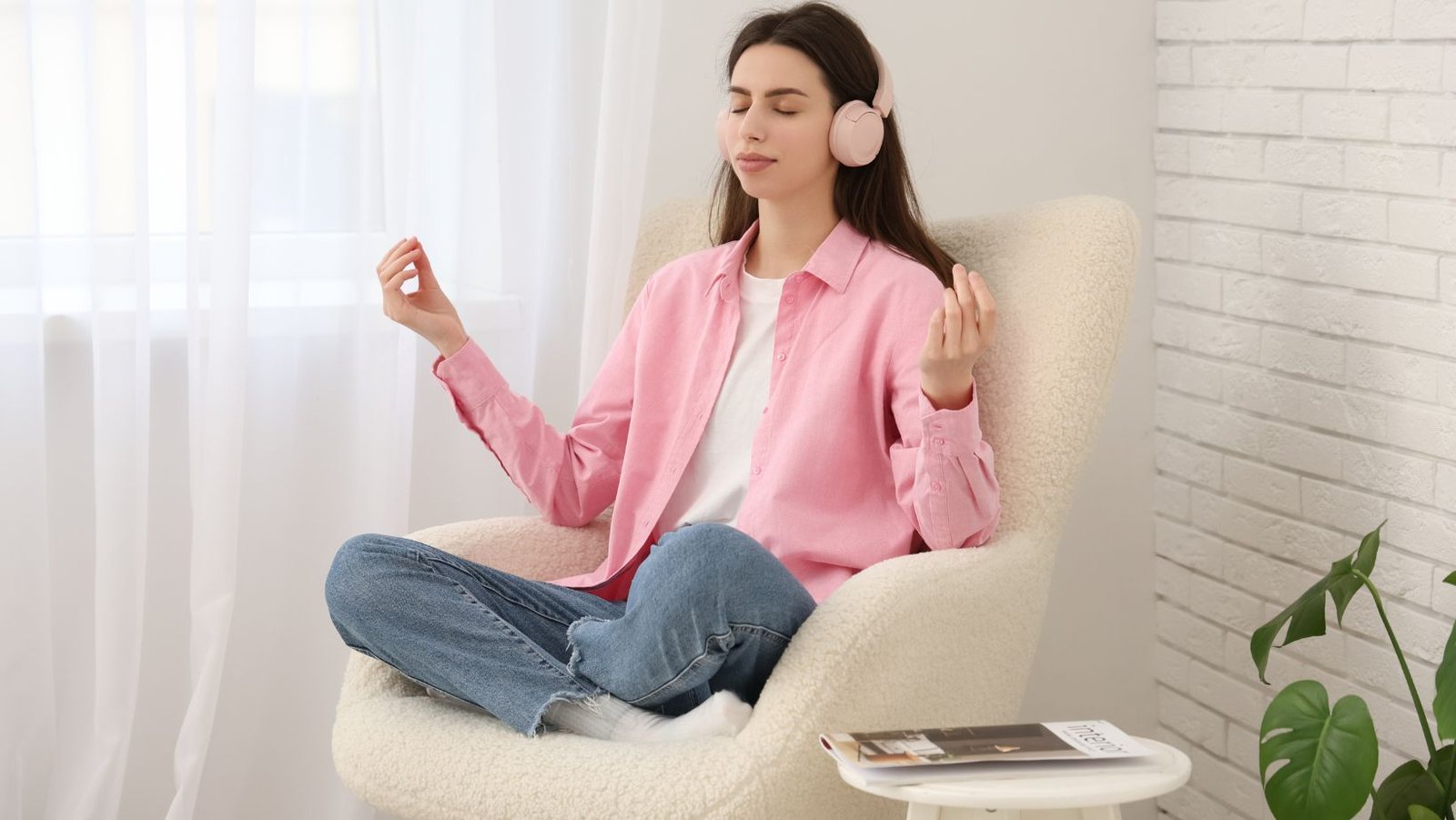
You can sit upright in a chair. You do not need a cushion from a monastery. Support your back. Keep your spine neutral. When posture is stable, attention stabilizes with it.
Meditation for beginners improves dramatically when physical discomfort is removed as a distraction.
2. Start Smaller Than You Think You Should
Five minutes daily beats thirty minutes once a week.
When building a simple meditation practice, success matters more than duration. Research on habit formation shows that consistency builds identity, and identity builds sustainability.
Start meditating daily for five minutes. Increase only when the practice feels stable.
If you want structure, I’ll be releasing a weekly 10 minute guided meditation through the podcast that you can sit with. It is designed specifically for beginners who want something simple and consistent without overcomplicating the process. Use it as a training wheel, not a crutch.
3. Pick the Right Time of Day
Meditation is easier when your nervous system is not overloaded. Early morning or before bed works well for many people because those moments naturally carry less external pressure.
Avoid trying to meditate in the middle of chaos. Beginner meditation tips often fail because timing is unrealistic.
Make it predictable.
4. Remove Environmental Friction
Limited noise helps. Putting your phone in another room helps more.
Perfect silence is not required. Fewer interruptions are. If you consistently practice in the same location, your brain begins associating that space with stillness.
Environment shapes behavior faster than willpower does.
5. Use Guided Meditation If Needed
There is no medal for doing it alone.
Guided meditation removes the mental negotiation of whether you are “doing it right.” It provides structure and keeps you anchored.
Meditation for beginners becomes easier when the cognitive load is reduced.
6. Experiment With Different Styles
Not all meditation feels the same.
Mindfulness meditation focuses on breath and awareness.
Metta meditation cultivates compassion.
Mantra meditation anchors attention through repetition.
Vipassana emphasizes insight through observation.
If one style feels frustrating, try another. The goal is consistency, not ideological loyalty.
7. Use a Timer and Remove Decision Fatigue
Checking the clock interrupts focus. A simple timer frees your attention.
Decision fatigue also makes meditation harder than necessary. Decide in advance when and where you will practice so that you remove daily negotiation.
When friction decreases, meditation becomes easier.

The Science Behind Making Meditation Easier
Functional MRI studies show that consistent meditation strengthens the prefrontal cortex, the region responsible for attention and impulse control. It also reduces activity in the default mode network, which is associated with mind wandering and rumination.
In practical terms, meditation trains your brain to focus and reduces unnecessary mental noise.
The early difficulty beginners experience is neural resistance to unfamiliar training. The brain prefers habit. Stillness is new.
With regular repetition, neural pathways adapt. Resistance lowers. Attention stabilizes.
It becomes easier because your brain changes.
Meditation and the Change Happens Now Framework
Meditation directly supports two of the core principles from Change Happens Now:
Awareness in the Moment
Meditation trains you to notice thoughts, impulses, and emotions as they arise rather than after they have already influenced behavior.
Interrupt the Pattern
Every time your attention drifts and you gently return to the breath, you are practicing pattern interruption. That same mechanism transfers into daily life. Instead of reacting impulsively, you pause and choose.
Meditation is not separate from self improvement. It is foundational to it.

You Do Not Need to Become a Monk
There is a misconception that meditation requires isolation, long retreats, or a spiritual identity shift.
In reality, five to ten minutes per day produces measurable benefits.
You do not need incense. You do not need special clothing. You do not need to detach from ambition or withdraw from the world.
You need consistency.
Mindfulness for beginners works best when it fits into ordinary life rather than restructuring life around it.
Closing Reflection
Meditation is simple but not easy. The simplicity is in the instruction: sit, breathe, observe. The difficulty is in repetition.
If you want to make meditation easier, start small, reduce friction, and practice daily. You are not trying to eliminate thought. You are simply training attention. Five minutes today becomes ten next month. Calm during meditation becomes clarity during conflict.
You do not become a monk.
You become more present.
Frequently Asked Questions
How can I make meditation easier as a beginner?
Start with five minutes daily, choose a comfortable upright posture, reduce distractions, and consider guided meditation. Consistency matters more than duration.
How long should beginners meditate?
Begin with five minutes per day. Increase gradually once the habit feels stable. Daily repetition builds identity and sustainability.
Is meditation supposed to feel difficult?
Yes, especially at first. Meditation feels challenging because the brain is conditioned for stimulation. The discomfort signals awareness increasing, not failure.
What type of meditation is best for beginners?
Mindfulness meditation focused on breath awareness is the simplest starting point. Guided meditation can also help reduce early resistance.
Can meditation really improve self improvement?
Yes. Meditation strengthens attention, emotional regulation, and impulse control. These are foundational skills for personal growth and long term behavior change.