
How to Make Meditation Easier: 7 Beginner Friendly Ways to Start Without Becoming a Monk

Summary: How to Make Meditation Easier (7 Beginner-Friendly Ways to Start)
If you want to know how to make meditation easier, the answer is not to try harder. It is to remove friction, lower the barrier, and start small enough that the practice can actually repeat. Meditation does not require robes, incense, or hours of silence. It requires consistency and realistic expectations, two things that become much more achievable when you stop treating it like a performance.
In this post you will learn:
- Why meditation feels harder than it looks, especially at first
- What is actually happening in your brain when you meditate
- 7 beginner meditation tips that reduce resistance and build the habit
- How to build a simple meditation practice you can sustain long-term
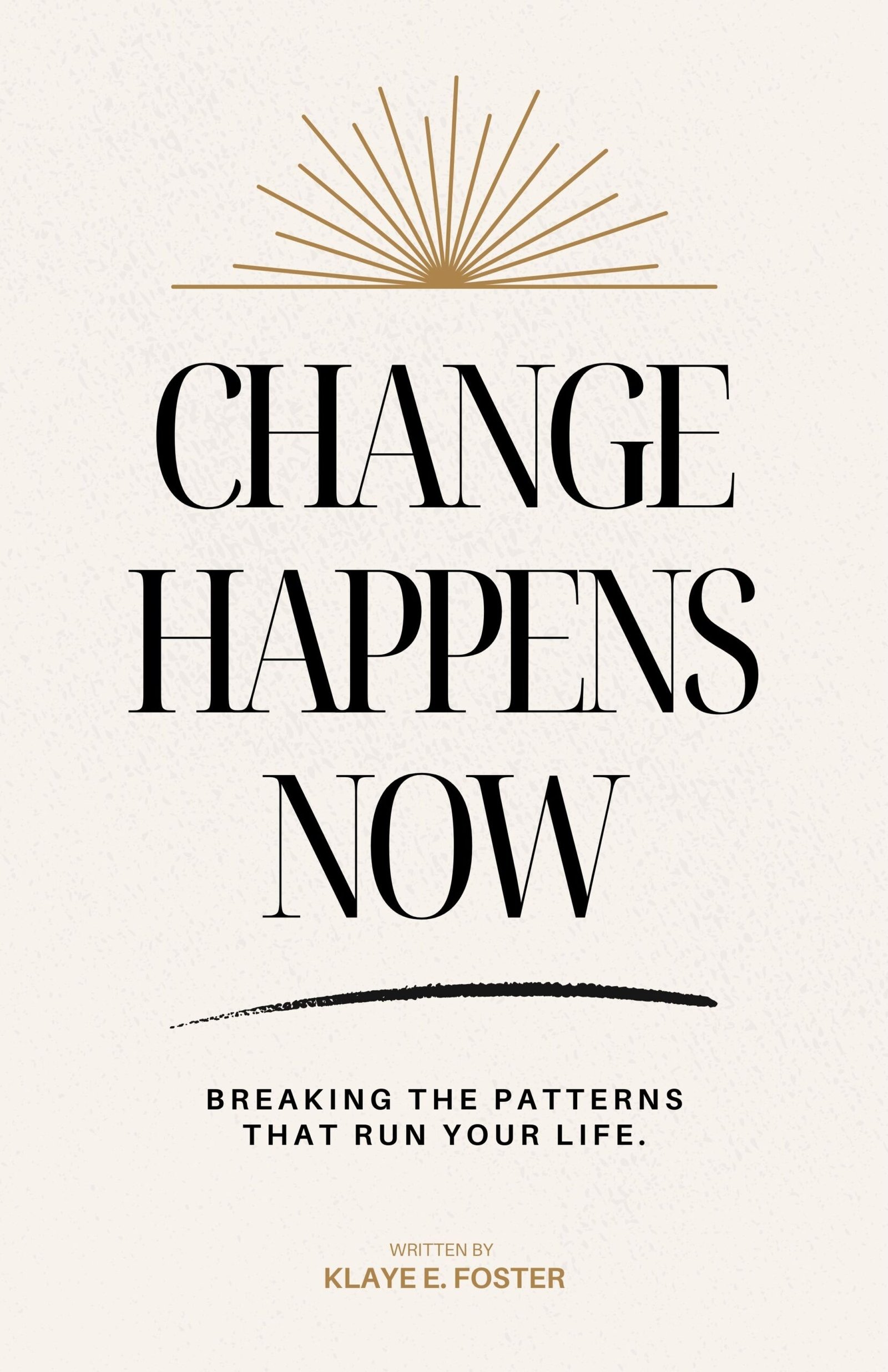
- How meditation connects to the Change Happens Now framework
Making meditation easier is not about finding the perfect technique or the ideal conditions. It is about removing enough friction that repetition becomes possible, and trusting that repetition is what produces everything the practice is supposed to produce.
“The mind is everything. What you think you become.”
— Attributed to the Buddha
Why Most People Give Up on Meditation
(And Why You Don't Have To)
For over two thousand years, contemplative traditions have pointed to the same thing: training the mind changes the quality of experience. Ancient Buddhist practitioners did not meditate to escape life. They meditated to see it more clearly.
Modern neuroscience now confirms what those traditions understood. Consistent meditation strengthens attention networks, reduces emotional reactivity, and increases gray matter in regions linked to self-regulation and impulse control. The evidence is substantial and growing.
So why do so many people try it once, decide they are not good at it, and never come back?
The reason meditation feels difficult in the beginning is not because you are incapable. It is because you are meeting your untrained mind for the first time, often in a quiet room with nothing to distract you from it. That is an uncomfortable introduction. But it is also the whole point.
Why Meditation Feels Hard at First
I remember the first time I sat down to meditate seriously. Not a casual two-minute attempt, but an actual committed sit. I had set a timer for ten minutes, found a quiet corner, closed my eyes, and prepared for the stillness I had heard so much about.
What I got was the opposite of stillness. My mind was louder than it had been all day. Every thought I had been too busy to notice was suddenly in the room with me, all at once, competing for attention. I kept checking how much time had passed. I shifted position twice. By minute four I was genuinely questioning whether I was built for this.
What I did not understand then was that nothing had gone wrong. The noise I was experiencing was not a sign that I was failing at meditation. It was a sign that I was finally paying enough attention to notice what had always been there. The thoughts were not louder because I was meditating. They seemed louder because for the first time I was sitting still enough to hear them.
This is what meditation for beginners almost always feels like at first, and it is why so many people stop before the practice has had any time to work. They mistake awareness of mental noise for the creation of it.
Sitting still for ten minutes sounds simple. In practice, the brain has been conditioned for constant stimulation. Dopamine cycles tied to phones, notifications, and endless input make stillness feel genuinely unfamiliar. When you remove the stimulation, the mind reacts by producing more noise. Thoughts seem louder. Discomfort feels sharper. The urge to check something, do something, or be somewhere else becomes almost physical.
None of this means something is wrong. It means the practice is working. You cannot see a pattern until you sit still long enough for it to show up.
The solution is not quitting. The solution is making the practice easier to sustain so that repetition can do what repetition does.
7 Ways to Make Meditation Easier
1. Choose Comfort Without Sloppiness
Find a position you can hold without pain and without drifting into sleep. You can sit upright in a chair. You do not need a cushion from a monastery. Support your back. Keep your spine roughly neutral.
This matters more than most beginner guides admit. When physical discomfort competes with the practice, discomfort wins. The body keeps sending signals, the mind keeps responding to them, and the whole session becomes a negotiation with posture rather than an experience of attention. Remove that variable before you start by finding a position that is sustainable for the duration you have chosen.
2. Start Smaller Than You Think You Should
Five minutes daily beats thirty minutes once a week. This is not a metaphor. It is what the research on habit formation consistently shows.
When building a simple meditation practice, success at showing up matters more than duration at the start. Each time you sit down and complete even a short session, you reinforce the identity of someone who meditates. That identity is what makes the practice sustainable over time, not willpower.
Start with five minutes. Increase only when the practice feels genuinely stable, meaning you no longer have to negotiate with yourself to do it. If you want something structured to work with, the podcast releases a guided ten-minute session specifically designed for beginners who want something simple and repeatable without overcomplicating the process. Use it as a starting point, not a dependency.
3. Pick the Right Time of Day
Meditation is easier when your nervous system is not already overloaded. Early morning before the day’s demands accumulate, or the evening before sleep when the pace has slowed, both tend to work well for most people.
Trying to meditate in the middle of chaos is a harder version of an already difficult practice. Beginners who place their session in an already pressured part of the day tend to experience more resistance and more skipped sessions. Make the timing predictable enough that it becomes part of the day’s rhythm rather than something squeezed in.
4. Remove Environmental Friction
Limited noise helps. Putting your phone in another room helps more than you expect.
Perfect silence is not required. Fewer interruptions are. Over time, consistently practicing in the same location gives the brain a helpful shortcut: this space is associated with stillness. That association reduces the time it takes to settle into the practice and lowers the friction of beginning.
Environment shapes behavior faster than willpower does. This is as true for meditation as it is for any other habit.
5. Use Guided Meditation If You Need It
There is no medal for doing it alone, especially at the start. Guided meditation removes one of the most common obstacles for beginners: the mental noise of wondering whether you are doing it right. It provides structure, keeps attention anchored, and reduces the cognitive load of self-monitoring.
If guided sessions feel useful, use them consistently. If you find them distracting after a while, move to unguided sessions. The goal is a sustainable practice, not a particular style of getting there.
6. Experiment With Different Styles
Not all meditation is the same and not all styles suit all people. If one approach feels consistently frustrating after a genuine attempt, it is worth trying another before concluding that meditation simply does not work for you.
Mindfulness meditation focuses on breath and present-moment awareness. Metta meditation cultivates compassion, starting with yourself and extending outward. Mantra meditation anchors attention through the repetition of a word or phrase. Vipassana emphasizes insight through observation of sensations, thoughts, and emotions as they arise and pass.
The goal is consistency, not ideological loyalty to any particular tradition. Find the approach that creates the least friction for you and practice that one.
7. Use a Timer and Remove Decision Fatigue
Checking the clock interrupts focus and introduces a low-level anxiety about time that competes with the practice. A simple timer set before you begin removes that entirely. You sit until it sounds. There is nothing to monitor.
Decision fatigue is the other invisible obstacle. When the question of when to meditate, where to do it, and for how long is settled each day in the moment, the small mental cost of those decisions adds up. Over time, that cost becomes resistance. Decide once, in advance, and make the daily act of practicing a continuation rather than a decision.

The Science Behind Making Meditation Easier
Understanding what is happening beneath the surface can make the early difficulty easier to sit with.
Sara Lazar, a neuroscientist at Harvard Medical School, conducted some of the first structural imaging research on long-term meditators. Her studies found measurable increases in cortical thickness in regions associated with attention, interoception, and sensory processing, changes that were visible in the brain’s physical structure, not just its activity patterns. Subsequent research confirmed that these changes are not exclusive to decades-long practitioners. They begin appearing in people who have practiced consistently for as little as eight weeks.
Functional MRI studies show that consistent meditation strengthens the prefrontal cortex, the region responsible for sustained attention, decision-making, and impulse control. It also reduces activity in the default mode network, the system associated with mind-wandering, rumination, and the background hum of self-referential thinking that most people experience as mental noise.
Herbert Benson at Harvard identified what he called the relaxation response: a measurable physiological state, the opposite of the stress response, that meditation reliably activates. Heart rate slows, blood pressure drops, cortisol levels decrease, and the nervous system shifts from sympathetic activation toward parasympathetic recovery. This is not a subjective impression. It is a documented physiological shift that occurs consistently during meditation practice.
In practical terms, meditation trains your brain to focus and reduces the automatic drift toward distraction. The early difficulty beginners experience is the brain encountering unfamiliar training. The mind prefers habit, and stillness is not yet a habit.
With regular repetition, neural pathways adapt. The resistance that felt almost physical in early sessions begins to lower. The settling-in period at the start of a session shortens. Attention becomes easier to hold and easier to return to when it drifts.
It becomes easier because your brain physically changes in response to the practice. That is not metaphor. It is what the imaging research shows.
The effects beginners typically notice first are not dramatic. They tend to be quiet and cumulative: a slightly longer pause before reacting to something frustrating, a moment of noticing a thought before being carried by it, a small but real improvement in the ability to return attention to what is in front of them. These shifts happen well before the deeper changes become measurable, which is part of why they are easy to miss if you are looking for something obvious.
Meditation and the Change Happens Now Framework
Meditation directly supports two of the core principles from Change Happens Now.
The first is Awareness in the Moment. Meditation trains you to notice thoughts, impulses, and emotions as they arise rather than after they have already shaped behavior. This is the same skill that allows you to catch a pattern mid-cycle rather than discovering it after the fact.
The second is Interrupt the Pattern. Every time your attention drifts during meditation and you gently return it to the breath, you are practicing exactly this. You are noticing that attention has moved, declining to follow it further, and choosing where to place it instead. That same mechanism transfers into daily life. The pause before a reactive response. The moment of seeing a familiar pattern before it has fully played out. These are not separate skills from meditation. They are the same skill in a different context.
This is why meditation is not supplementary to self-improvement. For the kind of pattern-level change that Change Happens Now is built around, it is foundational.

You Do Not Need to Become a Monk
There is a persistent misconception that meditation requires isolation, long retreats, or some kind of identity shift toward the spiritual. That framing puts most people off before they start, and it is not accurate.
Five to ten minutes per day produces real, measurable changes in attention and emotional regulation. You do not need incense. You do not need special clothing, a specific cushion, or a cleared schedule. You do not need to detach from ambition or withdraw from an ordinary life.
You need consistency, and you need realistic expectations about what the early weeks actually feel like.
Mindfulness for beginners works best when it fits into ordinary life rather than requiring ordinary life to be restructured around it. Start where you are, with what you have, for as long as you can currently sustain. That is enough to begin.
Looking back at that first frustrated ten-minute sit, what I understand now is that the noise I experienced was the practice doing its job. It showed me exactly what I needed to see. The mind I had been living in all along, just finally quiet enough to notice it.
Frequently Asked Questions
How can I make meditation easier as a beginner?
Start with five minutes daily, choose a comfortable upright position, reduce environmental distractions, and consider using guided meditation to reduce the cognitive load of self-monitoring. Consistency matters far more than duration in the early stages.
Why does my mind get busier when I meditate? Because you are paying attention to it for the first time. The thoughts were always there. Meditation simply removes the distractions that were covering them. A busy mind during meditation is not failure. It is awareness activating, which is the whole point of the practice.
How do I know if I’m meditating correctly?
If you sat down, noticed when your attention drifted, and returned it to the breath or your chosen anchor, you did it correctly. There is no other standard. The quality of the session is not measured by how quiet the mind was but by how many times you returned attention to where you intended it.
How long should beginners meditate?
Begin with five minutes per day. Increase gradually once the habit feels stable, meaning you no longer negotiate with yourself to do it. Daily repetition builds the identity and the neural pathways that make longer sessions feel natural over time.
What is the easiest form of meditation for beginners?
Mindfulness meditation focused on breath awareness is the simplest starting point because it requires no special equipment, no instruction beyond basic breath focus, and can be done anywhere. Guided meditation is an equally valid entry point and often reduces the early resistance of not knowing whether you are doing it right.
Can meditation help with anxiety?
Yes. Research consistently shows that regular meditation reduces activity in the brain regions associated with stress response and rumination. It does not eliminate anxiety, but it builds the capacity to notice anxious thinking as it arises rather than being carried by it, which gives you more room to choose how to respond. For significant anxiety, meditation works best alongside professional support rather than as a replacement for it.
Is meditation supposed to feel difficult?
Yes, especially at first. The brain has been conditioned for stimulation and novelty. Stillness feels unfamiliar, and the discomfort of that unfamiliarity is real. This is not failure. It is the early stage of training. With repetition, the resistance lowers because the neural pathways supporting sustained attention become stronger.
What type of meditation is best for beginners?
Breath-focused mindfulness is the most accessible starting point, but the best type is the one you will actually practice consistently. If one style creates persistent frustration after a genuine attempt, try another. Consistency and willingness to return to the practice matter more than the specific method you choose.
Final Thoughts
Meditation is simple but not easy. The simplicity is in the instruction: sit, breathe, observe. The difficulty is in returning to that instruction day after day before the results are obvious enough to feel motivating.
Start small. Remove the friction. Lower the bar enough that showing up feels achievable rather than ambitious. Five minutes today becomes ten next month. The calm you practice during meditation becomes the pause you have available during conflict. The attention you train on the breath becomes the attention you can bring to anything.
You do not become a monk. You become more present. And that, in practice, changes far more than it sounds like it should.
“The mind is everything. What you think you become.” — Attributed to the Buddha
This teaching is drawn from the Pali Canon, the earliest collection of Buddhist scriptures, and reflects one of the central insights of the tradition: the quality and direction of attention shapes the quality and direction of experience. What you repeatedly turn your mind toward, you strengthen. What you train your attention to notice, you become more able to influence. Meditation is the deliberate practice of that training.
The framework behind these principles is explored in depth in Change Happens Now. If this post resonated with you, the book is the natural next step.