


10 Things I Wish Someone Had Told Me Before My First Vipassana Retreat
Summary: 10 Things I Wish Someone Had Told Me Before My First Vipassana Retreat
In September 2017, I took three weeks off from work, drove alone from Atlanta to the deep South, and spent ten days in complete silence at the Dhamma Patapa Vipassana Meditation Center in Jesup, Georgia. No phone. No talking. No eye contact. Ten hours of meditation a day with a surprise hurricane on day four.
I had been meditating seriously for years before I went so I thought I knew what I was getting into before I arrived. I did not.
This post is not a sales pitch for a Vipassana retreat, though I will say up front that I recommend it without hesitation. It is an honest account of what the experience is actually like, written by someone who almost quit on day three, sat through a category four hurricane on day four, and drove home through the same racist territory I drove in through, feeling something completely different on the way out than I felt on the way in.
In this post:
- What a Vipassana Retreat actually is and who teaches it
- 10 honest things to expect from a 10-day retreat
- Why the hardest parts are also the most valuable
- What changed in me by the time I left
If you are thinking about going, read this first.
"Vipassana is the art of living. Not the art of escaping."
— S.N. Goenka
A Little Context Before We Start
Vipassana is one of the oldest meditation techniques on the planet, traced back to the original teachings of the Buddha. The word itself means to see things as they really are, not through the filter of what you want or fear or believe about yourself, but as they actually are in this moment.
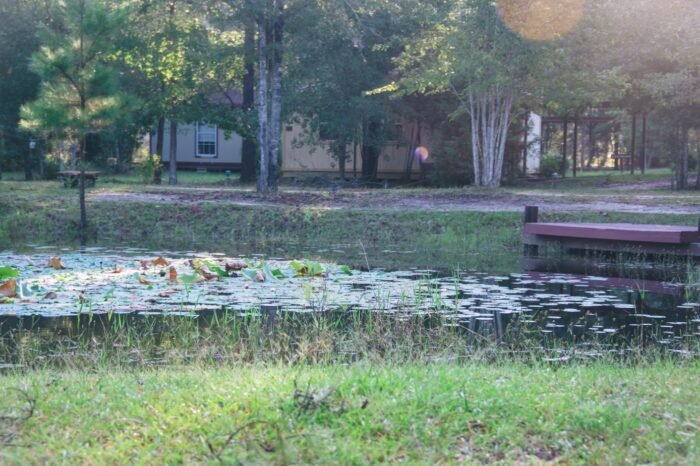
The version taught at retreat centers around the world was brought to the modern era by S.N. Goenka, a Burmese-Indian businessman who came to the practice through desperation, years of debilitating migraines that nothing could fix. The meditation healed him, and eventually he walked away from his successful business career entirely to teach it for the rest of his life. He established more than 200 centers worldwide before his death in 2013, all of them free of charge, all of them run on donations from students who had already attended. The Dhamma Patapa center in Jesup, Georgia, where I went, sits on forty acres of pine and hardwood forest in southeastern Georgia. Everything I am about to share is from those ten days.
1. The Drive There Is Already Part of It
Before starting the retreat, I spent two days on nearby Jekyll Island before heading to the vipassana retreat center, just to slow down before going into silence. But when I finally pointed the car toward Jesup and drove deeper into southeastern Georgia, something in me started shifting before I ever set foot in the meditation hall.
That part of Georgia is as deep South as it gets. It is also the same county where Ahmaud Arbery was murdered years later for jogging in his own neighborhood. I am African American, and Atlanta had not fully prepared me for the particular quality of hostility I felt when I stopped at the local Piggly Wiggly to grab a few things before the retreat. The stares were not subtle. They were the kind that want you to feel them. I kept my face neutral and left, but something in my chest had already tightened up.
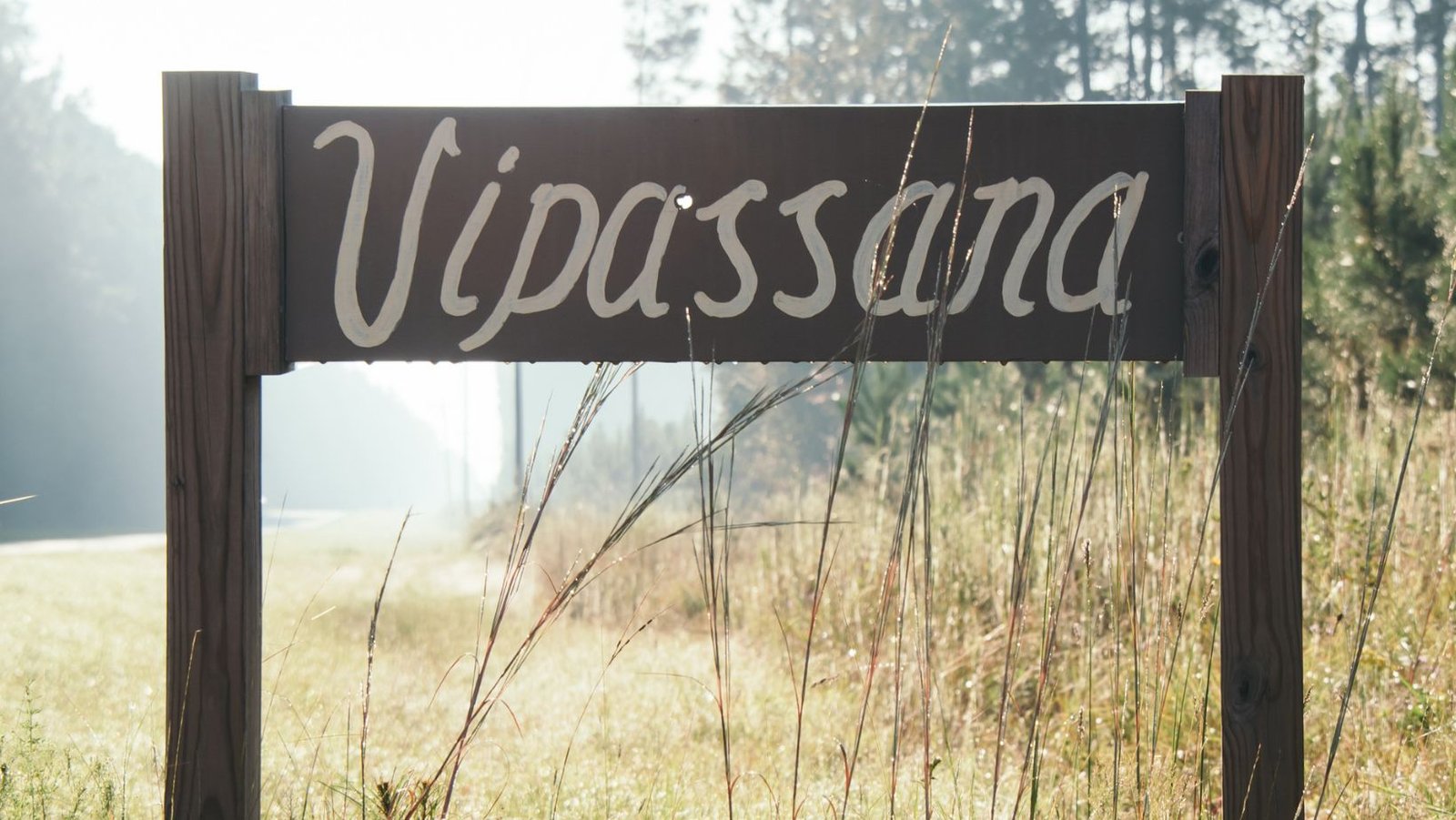
When I pulled up to the retreat center and the first thing I saw was the welcome sign with bullet holes in it. The locals had not wanted the hippies there meditating in their county. The center had purchased forty acres specifically to create enough distance from the surrounding community to keep students safe.
I sat with that for a moment. Then I drove through.
I tell you all of this because the experience does not begin when you sit down on the cushion. It begins the moment you decide to go. Whatever you are carrying when you arrive, you will be sitting with it. That is not a warning. It is the whole design. The retreat does not ask you to arrive empty handed. It asks you to bring everything and then learn how to sit with it honestly.
If you can, build some transition time into your trip before you arrive. A day or two of slowing down before you surrender the phone and electronics makes the adjustment less jarring. The decompression is worth the extra days.
2. Giving Up Your Phone Will Feel Stranger Than You Think
They collect the phones and electronics on day one. You hand everything over and that is that.
I thought this would be a relief. I had been wanting to disconnect from the internet and social media for a while. What I did not anticipate was how automatic the reaching for device would be. For the first three days, my hand kept moving toward an empty pocket. I would wake up in the morning and my eyes would go to the nightstand out of pure reflex, looking for something that was not there.
When the phone and your devices disappear, you start to realize how much of your interior life you had been handing off to it. Every quiet moment, every gap between activities, every stretch of uncertainty had been filled by endless scrolling. Without it, those gaps opened back up, and what was living inside them had nowhere to go but to the top of the mind.
That can be avery uncomfortable feeling. It is also the beginning of the whole practice.
If you want to make the transition easier, I recommend that you start reducing your phone and electronics use in the days before you go. Just enough to practice sitting in gaps without reaching for it. The withdrawal is real, and a little preparation goes a long way.
3. It Will Get Louder Before It Gets Quiet
The silence at a Vipassana retreat is not immediately peaceful. When you remove talking, eye contact, your phone, reading, writing, and every other form of outward engagement, the mind does not simply settle down. It gets louder. The thoughts that had been successfully kept at arm’s length by constant busyness now have nothing competing with them. They show up and take front seat in the mind.
For me, a lot of what came up in those first few days was still connected to the drive down. The image of those stares at the grocery store. The bullet holes. The tightness in my chest that I had been quietly managing since I arrived. I was sitting in a meditation hall trying to observe my breath, and underneath the breath was a whole layer of something that had nothing to do with breathing.
The instruction at the Vipassana retreat, delivered in a video recording of Goenka’s steady voice during the sessions, was simply to observe. Whatever arises, observe it without reacting. Do not push it away. Do not chase it. Just notice.
That instruction is harder than it sounds when what is arising has weight behind it. But it is also, I eventually discovered, exactly the right instruction.
What I wish I had known going in: the noise is not a problem. It is not a sign that you are doing it wrong or that the technique is not working. It is the first layer of the process. The quiet comes after you have sat with the noise long enough to stop fighting it. Be patient with the first few days. They are doing something even when they do not feel like it.
4. Days Three and Four Will Make You Want to Quit
I want to say this plainly because no one said it to me plainly before I arrived: days three and four are when most people leave. They warn you of this when you first arrive, but you don’t realize how serious they are until you reach those days.
Days three and four of a Vipassana retreat is when the novelty has worn off. The end is not close enough to feel real. The physical pain from sitting for ten hours a day has accumulated to a point where it is no longer something you can breathe through easily, and the instruction to observe discomfort rather than shift away from it starts to feel genuinely unreasonable.
On day three I had a fully worked-out internal argument for going home. I had decided, almost completely, that this was not for me and that there was no shame in admitting that. I lay in my bunk running through it the way you do when you have basically already decided but are waiting for one more piece of permission.
I did not leave though. Not because I felt strong or committed or clear. Because I was too stubborn to get back in that car. But here is what I know now: whatever broke open later in those ten days, the hurricane sit, the loosening I felt in the body scan around day seven, the drive home, none of it would have been available if I had left that day. The threshold was the threshold for a reason.
Know this before you go: the urge to quit on days three and four is almost universal, and it is almost always wrong. The Vipassana retreat teachers know it is coming. The structure of the retreat is built around it. Make the decision in advance, before you are in the middle of it and your back hurts and the end feels impossibly far away. Decide now that you are staying at least through day five. That one committed decision, made before you need it, is worth more than any amount of motivation in the moment.

5. A Hurricane May or May Not Hit. Something Will.
On day four of my Vipassana retreat hurricane Irma came through southeastern Georgia.
The teachers gathered everyone in the meeting space and explained the situation. They offered to arrange transportation out for anyone who wanted to leave. They were clear that the choice was entirely personal.
Most people stayed. I decided to stay too.
What I want to be honest about is that staying did not feel noble in the moment. The living quarters were modest wooden structures, and when the storm hit at full force you could feel the building move. Trees were coming down in the forest around us. It was loud and it was dark and it was genuinely frightening in the way that things are frightening when they remind you that you are small.
Following the instructions, I climbed into my bunk and went back to the breath.
And somewhere in the middle of that storm, something happened that I have only felt one other time in my life, during the meditation sit I described in What a Spiritual Awakening Taught Me About the Ego, Happiness, and the True Self. Underneath the fear, there was something steady. Not the absence of fear. Something the fear was sitting on top of. A stillness that the wind and the rain could not reach.
Your challenge probably will not be a hurricane. But something will test you during those ten days. Your back. A memory that surfaces unexpectedly. A bout of anxiety that has no obvious source. A moment where the whole thing feels pointless. Whatever it is, the same principle applies: it is not in the way of the practice. It is the practice. The Vipassana retreat is not asking you to transcend difficulty. It is asking you to stay present with it. Those are very different things, and the second one is actually doable.
6. The Technique Itself Takes Time to Land
Vipassana uses two practices in sequence.
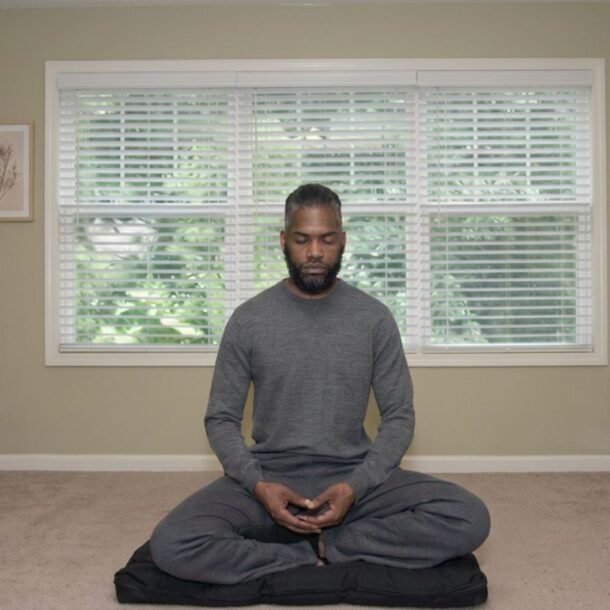
The first is Anapana: simply observing the natural breath at the nostrils, without changing it, without following it further than the tip of the nose. Just the sensation of air entering and leaving. This seems almost insultingly simple until you try to do it for an hour and realize how often the mind has wandered somewhere else entirely before you have noticed.
The second is the Vipassana body scan: moving attention through the entire body systematically, noticing whatever sensations are present in each area, pleasant or unpleasant, with as much equanimity as you can bring to it. The goal is not relaxation. The goal is to train the mind to observe experience without immediately reacting to it, which, it turns out, is a skill that transfers into every corner of your life.
In the first few days the technique felt mechanical to me. I was following instructions without feeling much connection to what I was doing. Around day five or six something shifted. The scan started moving differently. Areas of the body that had felt blocked or dense began to open up in a way I can only describe by saying that the awareness seemed to go deeper than the surface. There were moments that felt like nothing I had touched in years of regular meditation practice.
Do not expect this to happen on day two. The first three days are essentially the setup, and Goenka even says as much in the evening discourses. Trust that the technique is building something even when it feels like nothing is happening. The shift, when it comes, tends to arrive quietly and without announcement. You notice it after the fact, not in the moment it begins.
7. The Silence Will Become Something You Do Not Want to Give Back
On the last day, the noble silence ends. Students can speak again, and there is a warm kind of chaos to it, people laughing, introducing themselves, discovering that the person they had been sitting next to for ten days is from their same city. And surprisingly telling each other that we secretly depended on one and other to make it through. The idea that if this person can do it, then I can do it was in most of our minds.
For me personally, I wasn’t ready to talk yet.
I sat outside and watched the whole thing and felt genuinely content to stay where I was. The silence that had felt like a deprivation on day one had become something else entirely by day ten. It had texture. It had a quality to it that conversation felt like it would interrupt rather than enhance.
I eventually joined in. It was good to connect. I had painted a picture in my mind of how certain people would speak and act. But once we were able to talk I was surprised to see that those images were completely wrong.
When it was time to leave the Vipassana retreat I drove home alone and did not turn the radio on for most of the car ride, and that felt like a choice I was making rather than a leftover habit from the retreat. I just wanted to stay inside that quiet a little longer.
If you have never experienced a silence that feels like it is something rather than the absence of something, this might be the most surprising part of the whole ten days. Plan for some transition time on the back end too, not just the front. The first day or two after you leave, the world is going to feel louder than you remember it. Give yourself room to land before you drive back into a full schedule.
8. The Physical Challenge Is Real, and It Is Also the Practice
Ten hours of sitting a day will hurt. I am going to be direct about that because I think some people go in expecting discomfort to be a sign that they are doing something wrong.
It is not. The discomfort is part of the practice.
When you are instructed to observe a painful sensation in your lower back without shifting your position, without doing anything to make it stop, what you are actually practicing is the same skill that makes it possible to sit with emotional pain without immediately doing something to escape it. The body is the training ground. The capacity you are building is much broader than managing back pain.
My back was in serious trouble by day three. There were moments when the pain was genuinely the loudest thing in the room, louder than the breath, louder than the thoughts, just this insistent signal that I needed to move. I did not always stay still. I am not going to pretend I was perfect at this. But the attempts to stay, and the noticing of what happened when I stayed, built something I have drawn on many times since.
A few practical things that actually help before you do your Vipassana retreat: stretch deliberately in the days before you go, especially your hips and lower back. Bring a meditation cushion if you have one, as the center provides them but having your own familiar support matters. During the sits themselves, experiment with small adjustments to your posture early in the course rather than waiting until the pain is acute. And when it hurts, try to observe it before you move. Even once. That single act of staying with discomfort instead of immediately escaping it is the whole instruction in miniature.

9. What Happens Inside Is Yours
At the end of the ten days, when the silence broke and everyone gathered outside, I noticed that people’s faces looked different. Lighter, mostly. Softer around the edges. Some people were emotional. A few were visibly shaken in a way that was clearly not negative, more like something had come loose that had been held too tight for a long time.
Most of us didn’t talk about what specifically happened during their sits. That felt right. What happens during a ten-day Vipassana retreat is personal in a way that does not translate easily, and trying to summarize it before you have even driven home can flatten it before it has had time to settle.
For me, what happened around day seven was that the tightness I had been carrying since the drive down began to dissolve. Not because I worked on it or reasoned my way through it. It dissolved through the same process of sustained observation the whole technique is built on. I sat with it long enough and honestly enough that it started to show me what was underneath it. The anger I had been holding since the grocery store, the wall that had gone up when I saw that sign, both had something underneath them. Something older and more tired than angry. And when I could feel that, my relationship to the whole thing changed.
What happens in your sits will be yours. I cannot tell you what to expect there, and I would be skeptical of anyone who tells you they can. But this is worth knowing: people come out of these ten days changed in ways that are sometimes hard to articulate and often slow to fully reveal themselves. Give whatever happened inside some room to breathe before you try to explain it to anyone else. Some of it needs time before it becomes language.
10. The Drive Home Will Not Feel Like the Drive There
I drove back through the same roads. Same flat landscape, same long stretches of Georgia pine. Same enormous Confederate flags planted in the ground by the highway, meant to be seen. Same painful contrast between the wealth in some places and the visible poverty in the Black communities nearby.
And I felt something I had not planned for and cannot fully explain. Compassion. Real, from the heart, compassion.
Not the kind you talk yourself into because you know it is the right way to be. Not tolerance, goodwill, or any of the things we perform when we want to seem like the bigger person. Something that came from a much quieter place than any of that. A genuine wanting of good things for the same people who had looked at me with contempt a week and a half earlier.
What I kept coming back to was this: people who are at peace inside do not need to make other people feel like a threat. The hatred I had encountered on the way in was not something those people were doing from a place of strength. It was the sound of suffering looking for somewhere to go. Their hostility was about them, not about me. And when I could actually feel that rather than just understand it as a concept, the wall I had built, the one that had been quietly keeping me defended since that parking lot, just was not there anymore.
I am not saying what I encountered on that drive was okay. The history behind those flags and that sign and those stares is real and it is not something to be softened. But understanding where something comes from and accepting the harm it does are not the same thing. I came home holding both, and that felt more honest and more free than the version of me that had driven in a week and a half earlier.
That feeling stayed with me in a meaningful way for weeks. And even now, years later, something from those ten days is still in the room.
Would I Recommend a Vipassana Retreat?
Without hesitation. And here is what I would tell you if you were sitting across from me asking whether to go.
Go in knowing it will be hard, but not in a way that requires special strength. A Vipassana retreat is not asking for heroics. It is asking for honesty and stubbornness, the willingness to stay when the convincing arguments for leaving show up. Those two qualities will get you through it more reliably than any amount of meditation experience.
Clear your schedule properly. Not a weekend, not a week. The ten days plus travel and some real transition time on either side. I took three weeks total and I did not regret a single day of that. What you are doing there is not something you want to rush back from.
The food is all vegetarian and genuinely good. The accommodations are modest and clean. The schedule is strict and it holds you in a way that actually helps, because you never have to decide what to do next. Everything is decided. Your only job is to show up to each sit.
The courses at Dhamma centers worldwide are completely free. Run on donations from students who have already sat. There is nothing to buy, no ideology to sign onto, no follow-up program. You sit, you practice, and if you found it valuable you contribute what you can so the next person can go for free. That model alone tells you something about the integrity of what is being offered.
If you are anywhere near the Southeast, the Dhamma Patapa center in Jesup, Georgia is where I went. I would go back.
Just stop at a grocery store before you get to Wayne County.
Frequently Asked Questions
What is a Vipassana meditation retreat?
A Vipassana retreat is a residential meditation course, typically ten days, in which students practice an ancient technique of breath observation and body scanning rooted in the teachings of the Buddha. Students observe noble silence for the full duration, meaning no talking, no eye contact with other students, no phones, no writing, and no reading. The day begins at four in the morning and involves approximately ten hours of meditation practice.
Who is S.N. Goenka?
S.N. Goenka was a Burmese-Indian businessman who came to Vipassana meditation after years of suffering from severe migraines that nothing else could relieve. Transformed by the practice, he eventually left his career to teach it freely for the rest of his life. He established a global network of more than 200 centers before his death in 2013. At every course worldwide, his teachings are delivered via video recordings, so students everywhere receive instruction in his own voice.
What is noble silence?
Noble silence is the practice of refraining from all communication with other students during the retreat. This includes speaking, gesturing, and eye contact. Students may still speak briefly with the teachers if they have questions. The silence is not a rule for its own sake. It removes the social layer that normally occupies a significant amount of mental energy, creating conditions for deeper inward attention.
Is it suitable for complete beginners?
Yes. No prior meditation experience is required. The instruction is thorough and builds gradually over the first few days. The challenge is not technical. It is sustaining the commitment through the harder middle days, which no amount of prior experience fully prepares you for. Coming in with honest expectations and a genuine willingness to sit with discomfort is more useful than any amount of meditation background.
How much does it cost?
Nothing. All courses in the S.N. Goenka tradition are completely free. The centers are run on donations from students who have already completed a course. First-time students pay nothing and are not asked to contribute. At the end of the course, if the experience felt valuable, you have the option to donate what you are able so the next person can attend for free.
What should I bring?
Comfortable, modest clothing. Any medications you need. A willingness to be uncomfortable and stay anyway. Leave the books, the journals, and anything else you might reach for when things get quiet. The point is to have nothing to reach for.
What if I want to leave in the middle?
You can leave. Nobody is keeping you. But if you are on day three or four and everything in you wants to go, I would ask you to give it one more day before you decide. What most people find on the other side of that wall is worth what it cost to stay.
Ready to Go Deeper?
Ten days of silence gave me access to something I had spent years circling around. The Change System is what I built from the inside out after experiences like this one, a structured framework for the kind of inner work that changes you at the root rather than at the surface.
If you want to bring this quality of inner exploration into your everyday life without needing to disappear for ten days to access it, Change Happens Now is where to start.