



Personal Growth and Self Improvement: 5 Powerful Principles That Actually Work

Summary: Personal Growth and Self Improvement
(5 Principles That Actually Work)
Personal growth and self improvement begin with awareness. When unconscious habits become visible, sustainable change becomes possible. Most people approach self improvement as a problem of effort: they just need to try harder, stay more disciplined, or find the right system. What they usually discover is that effort applied to the wrong patterns produces the same results with more exhaustion.
Real self development starts not with ambition but with honest observation of what is already running your behavior, often without your knowledge or consent.
In this post you will learn:
- Why personal growth begins with self awareness, not motivation
- Why most self improvement advice doesn’t work long term
- How to unlock your potential through structured reflection
- Five sustainable self improvement strategies that build identity rather than just habits
- What personal growth actually looks like over time, including the parts most posts skip
- How to measure progress when external results are not yet visible
Personal growth and self improvement are not destinations you arrive at. They are directions you consistently move in, and the movement itself is what changes who you are over time.
“Until you make the unconscious conscious, it will direct your life and you will call it fate.”
— Carl Jung
A Quiet Moment That Changed How I Understood Growth
A few years into running my own businesses, I remember sitting down one evening and doing something I had not done in a long time. I looked honestly at the gap between the version of myself I had been describing to people and the version that was actually showing up in my daily decisions.
I was busy. Genuinely busy. Working hard, doing long hours, staying committed to the things I cared about. From the outside, everything looked like growth. But inside, I was starting to notice that certain discussions kept happening the same way. Certain projects kept stalling at the same point. Certain decisions kept getting made by the same internal voice, regardless of what I had decided previously.
I was not lazy or undisciplined. I was operating on autopilot, deeply enough that I had been optimizing patterns I had never took the time to examine. The habits I had built were running consistently. They were just running in directions I had not consciously chosen.
That evening was not a dramatic turning point. There was no breakthrough, no single insight that rearranged everything. It was just the uncomfortable clarity that comes from looking honestly at what is actually happening rather than what you are thinking is happening. It was the beginning of what personal growth and self improvement actually look like in practice, not more effort, but clearer sight.
Why Personal Growth Begins With Self Awareness
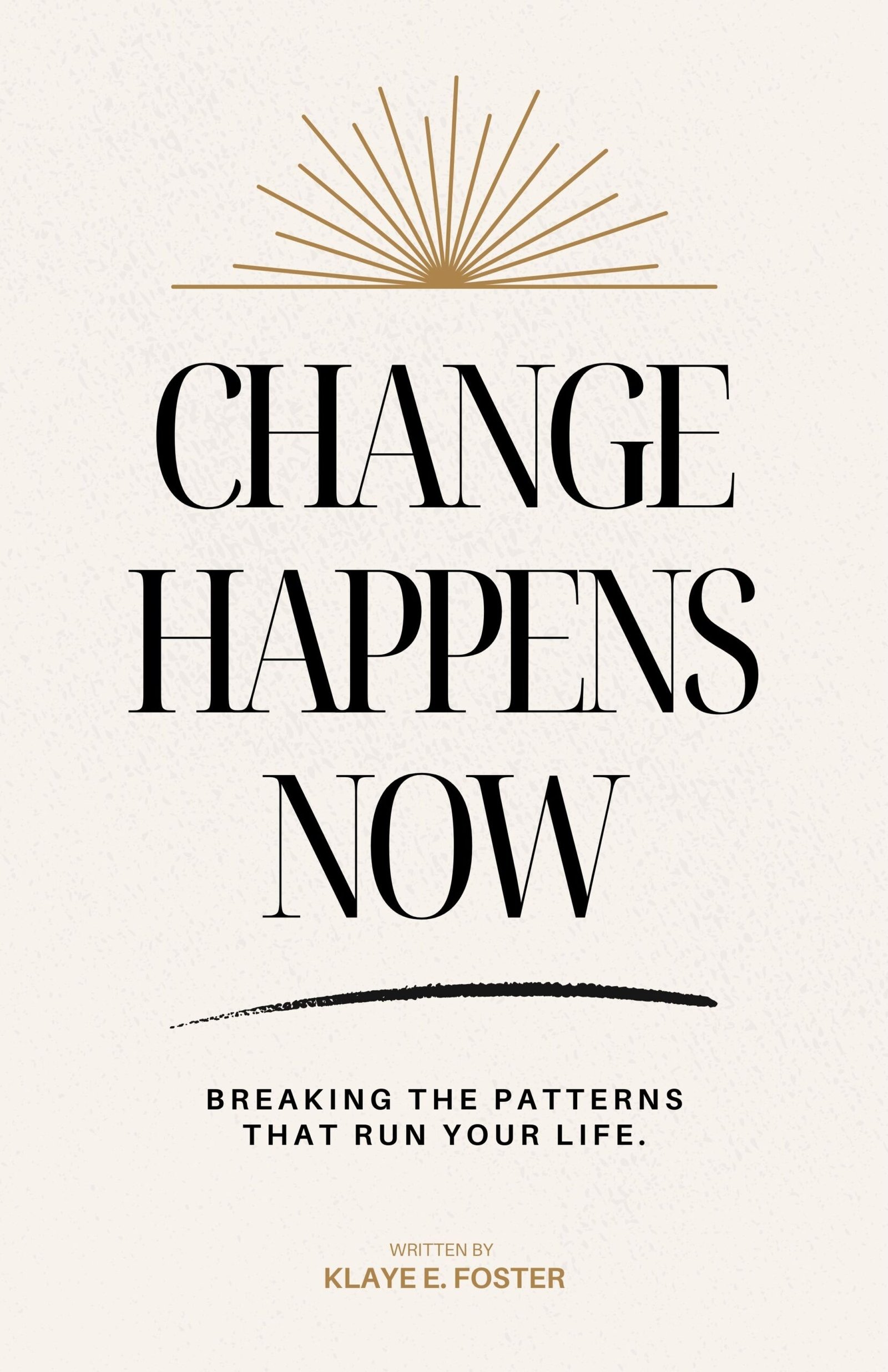
In my book Change Happens Now, the foundation of transformation is not intensity. It is self awareness applied consistently over time.
You cannot improve behavior that you have not first observed clearly. This sounds obvious until you realize how rarely most people actually do it. We adjust outputs without examining inputs. We try to feel different without looking at what is producing the feeling. We set new goals while the same automatic patterns continue running underneath them.
The importance of self awareness in personal growth is not a soft concept. It is structural. Without it, every self improvement strategy you apply sits on top of patterns that remain intact because they have never been seen clearly enough to be questioned. When those patterns produce predictable results, it can feel like destiny. In reality, it is repetition.
How to start personal growth is not a mystery. It begins with disciplined self-observation. Noticing recurring arguments. Identifying where projects consistently stall. Watching the distractions you reach for when discomfort appears. Examining the explanations you give yourself for why things happened the way they did.
These are conditioned responses running automatically. Once you see them clearly, their grip begins to loosen. Awareness creates space between impulse and action, and in that space, deliberate choice becomes possible. That is where sustainable self improvement strategies have room to work.
Why Most Self Improvement Advice Doesn't Work
The self improvement industry is enormous, and most of the people it serves keep coming back. Not because the advice is wrong, but because it addresses symptoms rather than structure.
Productivity advice tells you to organize your time. Sleep advice tells you to improve your recovery. Exercise advice tells you to move more. Diet advice tells you to eat differently. All of it is valid. None of it asks the question that matters most: what is the pattern underneath the behavior you are trying to change, and is that pattern being addressed or just worked around?
When personal development tips focus exclusively on output, the effort is real but the foundation remains unchanged. You build better habits on top of unexamined beliefs. You create new routines that coexist with old identities. The results last as long as the motivation or the structure holds, which is usually until the first significant disruption.
What actually works is different in kind, not just in degree. It asks what is running the behavior before asking how to change the behavior. It treats the pattern as the starting point rather than treating the symptom as the problem to solve.
Peter Gollwitzer, a psychologist at New York University whose research focuses on goal pursuit and implementation intentions, has consistently found that the gap between intention and action is not primarily a problem of motivation. It is a problem of specificity and structure. People who define not just what they want to do but when, where, and how they will do it under which specific conditions follow through at significantly higher rates than those who set goals in abstract terms. The mechanism is the same one this post describes: behavior changes when the underlying structure changes, not when effort increases.
This is why the five principles in this post are structured the way they are. Not a sequence of hacks, but a framework for working at the level where change actually holds.
How to Unlock Your Potential by Clarifying It
There is a common belief that potential is hidden and must be discovered, as if unlocking your potential requires some dramatic breakthrough that reveals what you were always meant to do.
In practice, potential is clarified rather than discovered. It tends to announce itself quietly and consistently through specific signals that most people walk past without stopping.
It shows up in the skills that feel genuinely natural to develop, where the effort still exists but the direction feels right. It shows up in the problems you instinctively move toward even when you have not been asked to. It shows up in interests that persist without external validation, the things you return to when no one is watching and nothing is at stake. It shows up in the frustrations that keep returning, which often signal unused capacity more accurately than achievement does.
Persistent dissatisfaction is frequently pointing at something. It is worth asking what.
Structured reflection is what converts these signals into usable direction. Questions worth sitting with: what kind of work consistently energizes rather than drains? Where do you perform well with the least resistance? What responsibility have you been avoiding because it requires visible growth in front of other people? What feedback have you dismissed more than once? What would you build if you were not managing other people’s expectations of you?
These are not easy questions, but they are more useful than searching for hidden potential. The potential is usually not hidden. It is simply unexamined.

Self Improvement Is Behavioral Precision, Not Motivation
Self improvement is often misunderstood as a product of motivation or inspiration, something that activates when the feeling is right and stalls when it is not. In reality, sustainable self improvement is behavioral precision repeated consistently, which is a completely different thing.
The version of personal growth that depends on motivation is inherently unstable because motivation is inherently unstable. It responds to novelty, immediate reward, and positive feedback. When those things are absent, as they are during most of the actual work of growth, motivation fades. The behavior it was powering fades with it.
Behavioral precision means something more specific. It means pausing before responding defensively. It means completing a commitment after the enthusiasm that created it has passed. It means choosing engagement over avoidance in the moment when avoidance would be easier. These are not dramatic actions. They are small and mostly invisible. But each interruption of an old pattern weakens it, and each deliberate action in a new direction strengthens the alternative.
In the identity-based habits framework explored in Change Happens Now, repeated conscious choices reshape identity. Identity then drives behavior more reliably than motivation ever could, because it does not depend on how you feel. When your behavior aligns with who you genuinely believe yourself to be, consistency becomes the natural state rather than the achievement.
5 Sustainable Self Improvement Strategies That Actually Work
1. Define the Identity You Intend to Build
Outcomes fluctuate. Identity compounds.
Before choosing any specific habit or strategy, decide what kind of person you are building toward. Not the outcomes you want but the qualities that person consistently demonstrates: discipline, patience, emotional stability, creative courage, reliable follow-through. When the identity is defined and genuinely held, daily behavior can be evaluated against it in a way that external goals cannot provide.
Asking “does this action reflect the person I am becoming?” is a more durable guide than asking “will this produce the result I want?” The first question is answerable in any moment. The second depends on timelines and variables you cannot fully control.
2. Study Emotional Triggers Without Judgment
Emotional reactions are among the most accurate data the self-improvement process has access to, and most people treat them as problems to manage rather than information to understand.
Irritation, envy, defensiveness, and shame often reveal unresolved beliefs about capability, worth, or safety that are shaping behavior below the level of conscious decision-making. When you treat these reactions as diagnostic information rather than personal failures, the patterns they represent become visible. Visible patterns can be worked with. Patterns that are suppressed or dismissed simply continue running.
The practice here is not analysis but observation. You notice the reaction, name it precisely, and get curious about what it is protecting or defending. Over time, that curiosity produces more useful information about your actual growth edges than any external assessment can.
3. Replace Patterns Instead of Eliminating Them
Habits are rarely removed successfully through direct force. The neurological pattern that a habit represents does not dissolve when the behavior stops. It goes dormant and tends to return under stress, fatigue, or emotional activation.
What works more reliably is replacement: a new behavior that serves a similar function in a different direction. If scrolling relieves stress, replace it with structured reflection, brief physical movement, or even a deliberate pause. The replacement addresses the need the pattern was serving while building the alternative. Over time, the new pattern accumulates its own strength and the original gradually becomes the less traveled path.
This is also why cold-turkey approaches to behavior change have a poor long-term track record. They remove the behavior without addressing the function it was serving. Replacement strategies are more sustainable because they work with the structure of habits rather than against it.
4. Align Your Environment With Your Growth Goals
Environment influences behavior more reliably than willpower does, and most people underinvest in designing it deliberately.
The physical and social environments you spend the most time in are constantly shaping what actions feel easy, normal, and worth doing. A cluttered workspace raises resistance to focused work. A social environment where avoidance is normalized makes avoidance feel reasonable. A phone within reach gets picked up. A goal written nowhere gets forgotten.
Environmental alignment for personal development means actively designing your surroundings to reduce friction on the behaviors you want and increase friction on the ones you are trying to change. It means choosing, where possible, to spend time around people who are building something, taking their commitments seriously, and treating growth as ordinary rather than exceptional. These adjustments do not replace internal work, but they significantly change the conditions in which that work happens.
5. Measure Progress Through Internal Stability
External validation is an unreliable and delayed indicator of personal growth. Results lag behind development, sometimes significantly. If external outcomes are the only measure, the gap between effort and visible reward becomes a reason to doubt whether growth is happening at all.
A more accurate and more immediate measure is internal stability. Are you responding to pressure more calmly than you were six months ago? Are you maintaining commitments more consistently, not perfectly, but more? Are you capable of tolerating discomfort without immediately reaching for an escape? Are the same triggers producing a slightly less automatic response?
If the answer to those questions is moving in a positive direction, personal growth is occurring. The external results will follow. They always follow the internal shift, just rarely on the timeline impatience would prefer.

The Long Game: What Personal Growth Actually Looks Like Over Time
Most posts about personal growth describe the before and the after. They skip the middle, which is where most people actually are most of the time.
The middle is not a dramatic place. It looks like a fairly ordinary Tuesday where you made a slightly better decision than you would have made a year ago and no one noticed, including you. It looks like catching a familiar pattern slightly earlier than you used to. It looks like recovering from a setback in four days instead of two weeks. It looks like a conversation that would have escalated going differently, not because you performed composure, but because the old trigger has genuinely lost some of its charge.
Progress in personal development is almost always quieter than expected. The identity shifts that compound into meaningful change over months and years do not announce themselves. You tend to notice them retrospectively, looking back at a situation and realizing you responded in a way that would have been impossible or at least very difficult at an earlier point.
Setbacks are part of this process, not interruptions to it. The patterns being changed are deeply conditioned. They return under stress, when energy is low, when the environment removes the supports that have been helping. Each time this happens and awareness eventually returns, that is not failure. It is the process. The real obstacle to personal growth is not difficulty. It is unconscious repetition going unnoticed long enough that it reestablishes itself as the default.
The long game is simply continuing to see clearly, continuing to interrupt the patterns you have committed to changing, and trusting that the accumulation of those small, quiet, mostly unwitnessed choices is producing something real, even when the evidence is not yet visible.
Closing Reflection on Personal Growth and Self Improvement
Personal growth and self improvement are not acts of self-criticism. They are acts of responsibility.
When awareness increases, choice increases. When choice increases, identity evolves. Over months and years, the compound effect of those adjustments becomes measurable in ways that were not visible at the start. The changes you made in the quiet, in the moments between what was easy and what was right, accumulate into a version of yourself that would have seemed like an ambitious claim at the beginning.
You do not need a new personality. You need a clearer understanding of the one currently shaping your life and a willingness to examine it honestly enough to change what is not working.
Change does not begin with ambition. It begins with attention.
Frequently Asked Questions
How do I start personal growth?
Start by increasing self awareness before attempting to change anything. Observe recurring habits, emotional triggers, and the patterns that keep producing the same outcomes. Awareness of what is already running your behavior is the necessary foundation for any sustainable change that follows.
Why is self awareness important in personal growth?
Because without it, self improvement efforts remain temporary. You can change behavior on the surface while the underlying patterns that generate it stay intact. Those patterns continue shaping decisions and outcomes regardless of the new habits placed on top of them. Awareness is what makes the work reach the level where change actually holds.
How can I unlock my potential?
Through structured reflection on where your energy, interest, and frustration are consistently pointing. Potential tends to announce itself through persistent signals: the work that feels right, the problems you keep moving toward, the dissatisfactions that will not go away. Clarifying those signals gives direction. Direction makes effort useful.
What are sustainable self improvement strategies?
Strategies that work with the structure of behavior rather than against it: identity-based habits, environmental alignment, emotional trigger analysis, and behavioral replacement rather than suppression. The common thread is addressing what is generating the behavior rather than just modifying the behavior itself.
Why do I keep failing at self improvement?
Usually because the strategy is addressing symptoms rather than structure. New habits placed on top of unchanged patterns tend to last as long as the motivation or external structure that supports them. When those fade, the original patterns return. Sustainable improvement requires working at the level of identity and belief, not just behavior.
What is the difference between personal growth and self improvement?
Self improvement tends to refer to specific, targeted changes: a habit, a skill, a behavior pattern. Personal growth is broader: it includes identity development, belief revision, expanded self-awareness, and the cumulative evolution of how you understand and relate to yourself and others. In practice, the best self improvement work is always in service of personal growth, but they are not the same thing.
How do I know if I’m actually growing?
Look inward rather than outward. Are familiar triggers producing slightly less automatic responses? Are you recovering from setbacks more quickly? Are you maintaining commitments more consistently? Are you having conversations that would have escalated before? These internal indicators tend to be more accurate and more timely than external results, which often lag behind the actual growth by months.
Can personal growth be harmful?
It can be when it becomes self-criticism rather than honest self-examination, when the gap between who you are and who you want to be is treated as evidence of inadequacy rather than potential. Growth pursued through shame tends to reinforce the same patterns it is trying to change. The most effective approach is curiosity without judgment: seeing clearly what is happening without making it mean something is wrong with you. Difficulty and friction are expected parts of the process, not signs that it is not working.
How long does personal growth take?
It is ongoing. Noticeable internal shifts can occur within weeks once awareness increases and deliberate practice begins. Meaningful identity-level changes tend to compound over months and years. The pace varies significantly depending on how consistently the practice is applied and how deeply conditioned the patterns being addressed are. The most honest answer is that it takes longer than impatience wants and shorter than fear suggests.
Final Thoughts
The version of yourself you are capable of becoming is not waiting for a better system, a more convenient season, or a stronger feeling of readiness. It is being built right now, through the small and mostly invisible decisions that happen between the moments you are being observed. The work of personal growth is largely private, quiet, and unglamorous. What it produces, over time and with consistent attention, is not.
The framework behind these principles is explored in depth in Change Happens Now. If this post resonated with you, the book is the natural next step.