



What a Spiritual Awakening Taught Me About the Ego, Happiness, and the True Self
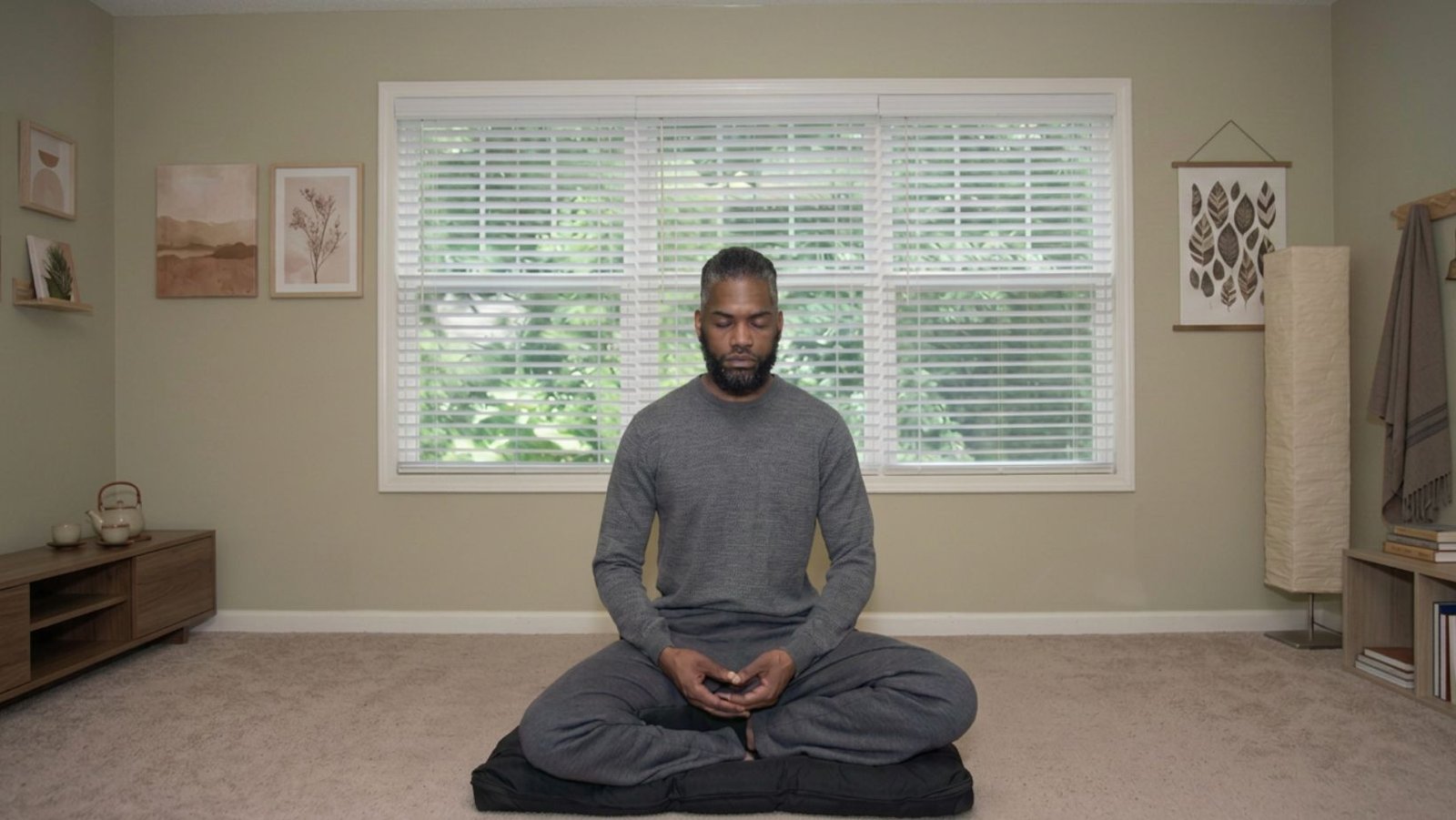
Summary: What a Spiritual Awakening Taught Me About the Ego, Happiness, and the True Self | The 5 Lessons
This is a different kind of post. There are no productivity frameworks here, no step-by-step systems. This is a personal story about something that happened to me about ten years ago during a meditation session that I can only describe as a spiritual awakening experience, and the five lessons it left behind that have shaped everything I have built since.
I held this story close for a long time. I did not want to share it publicly because I was afraid it would come across as ego-driven, like I was claiming some special status. But I eventually realized there are people who have had similar experiences and have nowhere to take them. So this is for those people too.
In this post you will find:
- The full story of what happened that night, told as honestly as I can tell it
- Background on Sri Ramana Maharshi and the self-inquiry practice that led there
- What a strong determination sit is and why it matters
- 5 lessons the experience left me with that I still carry today
I do not think I am enlightened. I think I got a taste of something. And that taste changed me permanently.
"Who you think you are will always be frightened of change. But it doesn't make any difference to who you truly are."
- Ram Dass
Who Was Sri Ramana Maharshi?
Before I tell you what happened that night, I need to tell you about the man whose book I was reading when it happened.
Sri Ramana Maharshi was an Indian sage born in 1879 in Tamil Nadu, India. At the age of 16, with no formal spiritual training whatsoever, he had a spontaneous awakening experience after confronting the fear of death directly. He became aware of what he described as an indestructible current or force that existed beyond the physical body, and from that point forward he lived in a state of what most traditions would call Self-realization. He spent the rest of his life at the foot of Arunachala hill, and seekers from around the world came to sit in his presence.
What made Ramana unique was the simplicity and directness of his teaching. Where other traditions offered elaborate practices, rituals, or years of preparatory study, Ramana pointed to one practice above all others: self-inquiry. And at the center of that practice was one question.
“Who am I?”
What Self-Inquiry Actually Is
Self-inquiry, or Vichara in Sanskrit, is not a philosophical question. It is a meditation practice. The aim is not to arrive at an intellectual answer but to trace the sense of “I” back to its source.
According to Ramana’s teachings as documented on the self-inquiry Wikipedia entry, the practice works by focusing attention on the “I-thought,” the primal sense of individual identity that underlies every other thought you have. When you say “I am thinking” or “I am feeling,” there is a subject doing the experiencing. Self-inquiry asks: what is that? Who is the one having this experience?
In practice, this often involves a body scan combined with the question. You scan through each part of the body, each thought, each emotion, and ask: am I this? If I lost this, would I still exist? The arm, the feeling, the memory, each thing gets examined until what remains is the awareness itself, the witness beneath all the content.
Ramana taught that this practice, done with enough focus and sincerity, could lead directly to the realization of the true Self, which he described as pure awareness, formless, boundless, and the actual nature of what we are beneath the layers of conditioning and ego. You can read more about the practice directly in Ram Dass’s description of how he practiced self-inquiry, which mirrors what I stumbled into that night almost exactly.
What a Strong Determination Sit Is
The other piece of context you need to understand what happened is the concept of a strong determination sit.
In Vipassana meditation, there is a practice called Adhitthana, a Pali term that translates to strong determination or fixedness of purpose. As described on the Hosh Yoga guide to strong determination sitting, it involves sitting completely still for an extended period, not adjusting your position, not opening your eyes, not responding to physical discomfort. The point is not punishment. It is training the mind to remain present and equanimous even when every instinct is screaming at you to move, adjust, or stop.
In a formal Vipassana retreat, students typically do three one-hour strong determination sits per day starting around day four. But the concept can be applied outside of a retreat context, which is exactly what I did that night, without fully knowing what I was doing.
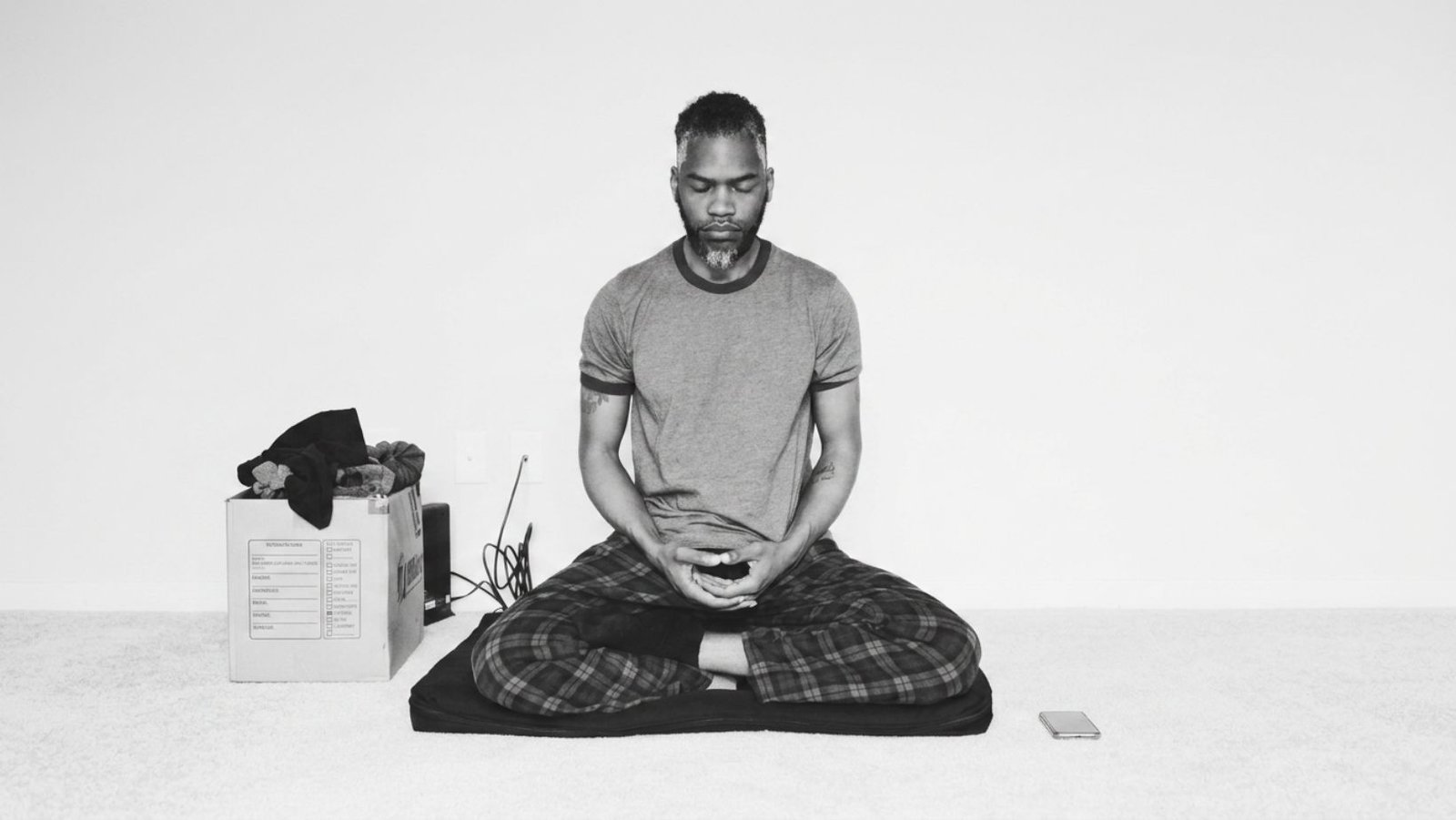
I made a pact with myself before I sat down. I was not getting up until I had some felt sense of what this practice was pointing toward. Looking back, I recognize that for what it was: a strong determination sit. At the time I just thought I was being stubborn.
The Night It Happened
About ten years ago I was alone in my room at night, reading a book about Sri Ramana Maharshi. I had been meditating seriously for a few of years at that point, mostly using apps, chants, and singing bowl recordings. I had never tried self-inquiry specifically. But reading about his life and his teachings, something in me felt pulled toward it in a way that was hard to explain. He was describing something that felt like it might be real. Not theoretical. But real.
I remember thinking, with complete sincerity and a little bit of ridiculousness in hindsight, that if the Buddha could do it, I could too. So I made my pact. I put my headphones on, set a timer for three hours, and started.
It felt like maybe twenty or thirty minutes had passed when I finally felt settled enough to begin the practice in earnest. I started the body scan, asking the question with each part. Am I my hand? Well, if I lost my hand I would still be me, so no. Am I my leg? No. Am I this emotion? No. Am I this thought? No. On and on, moving through the body, looking for the place where the self was actually located.
And then the panic started.
It crept in at first, then washed over me. There was something deeply unsettling about looking for yourself and not being able to find anything. My heart started beating hard. My breathing went shallow. The rational mind was screaming at me that something was wrong, that I should stop, that I should open my eyes and put this down. But I had made the pact. So I kept going.
The heart rate climbed. The breathing got worse. At some point it was so intense that I genuinely thought I was dying. My chest felt like it was about to burst. My hands were shaking. I was hyperventilating through the headphones.
And then I made a decision. A real one, not a thought about a decision. I told myself, in the clearest way I have ever told myself anything, that I was prepared to die right here, right now, before I stopped looking for this answer.
The moment I had that thought, something changed.
The Voice
I heard a voice. Not my internal voice. Someone I had never heard before. It was calm in a way that had nothing to do with the situation. Warm in a way I cannot really describe. The voice told me it was okay. That I was going to be okay.
That was all it said.
And something in me completely believed it. The panic stopped. Not gradually. It stopped.
The moment the panic stopped, everything went black.
I mean void-level black. Not the dark of the room with my eyes closed. Vacuum black. And then I felt it: a surge of energy shooting up my spine from the base all the way to the top of my skull. Following what I later understood to be the chakra pathway. And when it reached the crown of my head it exploded outward.
You know those images of a lotus blooming at the top of someone’s head in meditation depictions? That is the only visual comparison I have. Because that is exactly what it felt like. And the moment it opened, I was surrounded by light. Not a metaphor. Light. A shower of warm, bright light falling all around me and through me.
There were no thoughts. None. The internal dialogue that runs constantly, that background noise that we become so accustomed to that we forget it is there, was completely gone. I was no longer aware of being inside the body. I could observe myself still sitting there, but I was not located in that body in the way I normally am.
There were no words, but there was something that felt like understanding. Like I had plugged into something. Like information was being received, not processed, just received. Aha moments firing like fireworks, each one complete and wordless. I did not know if I was dying. I did not know if I was dead. And I genuinely did not care.
The River
At some point I came to what I can only describe as a decision point.
I became aware that I could keep going. That there was more, something deeper, something on the other side. But I also became aware, in a way that was more knowing than thinking, that if I kept going, I would not come back the same. The things I loved, the people I loved, the life I had built and cared about would no longer be accessible in the same way. I had arrived at a river. Crossing it meant the ego would dissolve completely. It meant living the rest of my life without the structure of individual identity that most of us move through the world with.
And the fear came back.
I understand now that the fear was the ego itself, recognizing the threat. It was not fear of death. It was fear of ego-death, which in some ways is more primal. And out of something that felt like compassion for that part of me, I chose to come back.
I threw my headphones off, lay flat on the floor, and genuinely lost it for a few minutes. When I calmed down I put the headphones back on and listened to Bob Marley’s “Three Little Birds” on repeat for hours. I am not even a little embarrassed to tell you that.
What followed was two weeks of a state I do not have adequate words for. Pure joy. Genuine compassion for every person I encountered. If I saw someone who needed help I stopped, no matter what I was doing. I went through drive-throughs to buy food for people on the street. Everything felt complete. Nothing felt wrong. I kept thinking, I cannot go back to work like this.
Eventually the feeling faded. The world settled back in. But I was not the same person who had sat down that night.
Why I Am Sharing This
For a long time I kept this private. Part of me worried it would come across as ego-driven, like “I had this experience and you did not,” which is the exact opposite of what it left me with.
But I later learned that experiences like this, while uncommon, are not singular. There are people who have been through something similar and have had no one to compare notes with. Holding an experience like that alone is its own kind of weight.
And from a purely modern scientific perspective, I have my own working theory: I believe what happened was that my brain genuinely thought I was dying. The intensity of the physical response, the absolute conviction that death was imminent, may have triggered the release of endogenous DMT, a compound the brain is thought to produce during near-death experiences. The profound dissolution of self, the light, the felt sense of receiving information, the absence of fear once the ego loosened its grip. All of it is consistent with what people who have had near-death experiences describe.
Maybe that is what it was. Maybe it was something else entirely. Whatever it was, I am grateful for it.
5 Things the Experience Taught Me
These are not abstract philosophical principles. These are things I know in a different way than I know most things, because I did not read them and believe them. I felt them directly, even if only briefly, and that changed what they mean to me.
1. The Ego Is a Construction, Not a Definition
The ego is the self-concept we build over a lifetime to help us navigate the world. It is a collection of identities, roles, beliefs, memories, and social positions that coalesces into something we call “me.” And it is genuinely useful. We need it to function.
But it is not what we actually are.
That night I went looking for the self inside the body and could not find it anywhere. Not in the hand, not in the emotions, not in the thoughts, not in the memories. What I found instead, briefly and overwhelmingly, was something that had no edges, no history, no fixed identity. The ego was not destroyed. I chose not to let it go. But I saw it for what it was: a frame we build around something that is much larger than any frame could contain.
If you live your entire life believing the frame is the picture, you spend your energy defending and maintaining a construction. The moment you see that the picture extends infinitely beyond the frame, something changes in how you hold the whole thing.
2. True Happiness Depends on Nothing
Before that night I believed, the way we all quietly believe, that happiness was located somewhere in the future. In a goal achieved, a relationship secured, a problem resolved. Conditional happiness. If I have this, then I can feel okay.
What I experienced in that state had nothing to do with any of those things. Nothing was resolved. Nothing had been achieved. I had not gotten anything I wanted. And the happiness was so complete that describing it as happiness feels inadequate. It was a baseline. It was what was underneath everything else when everything else went quiet.
Striving is not the problem. Goals are not the problem. The problem is believing that reaching them is where the feeling lives. It does not live there. It lives in the acceptance of what is, right now, without needing it to be different. That is the hardest truth I have ever tried to apply in daily life. And it is also the most useful one.
3. Compassion Starts With Yourself
For two weeks after that experience I felt a compassion for other people that was so natural it required no effort. I did not have to talk myself into caring. I did not have to remind myself to be patient or generous. It just came. And it came, I think, because whatever was running the show in those two weeks had completely accepted itself.
That is the part that is easy to miss. Compassion for others flows most freely when it starts inside. When you have genuinely extended grace to yourself, when you have stopped treating your own flaws as disqualifying evidence, something opens up in how you relate to other people. You stop needing them to be different because you have stopped needing yourself to be different. The work on self-compassion and how we talk to ourselves maps directly to this. What you practice toward yourself becomes what you have available for others.
4. A Focused Human Mind Is Capable of Immeasurable Things
What happened that night started with a decision. Not a casual intention. A full, unconditional commitment. I was not going to stop until I found what I was looking for, even if it cost me everything. And then it did, or it tried to, and I held to the commitment anyway.
I am not saying everyone should make pacts with themselves about potentially dying in meditation. I am saying that the quality of commitment I brought to that sit was different from how I usually approach things, and what it produced was different in kind, not just degree.
There is something in the human mind, when it becomes genuinely singularly focused on something, that accesses a capacity that ordinary effort does not. We see this in extreme physical feats, in creative breakthroughs, in moments of crisis where people do things they did not believe they were capable of. That capacity is not the exception. It is what we are. It just requires a particular kind of focus to access. This is the heart of Step 9 in The Change System: committed action aligned with a clear internal direction.
5. Life Is a Wave. You Are Not the Wave.
After the two weeks faded and the ordinary texture of life returned, the depression that used to visit me sometimes did not come back. And it still has not, in any of the ways it used to. What changed was not the circumstances of my life. What changed was my relationship to impermanence.
Life moves in cycles. There are high periods and low periods, good years and hard years, days where everything feels aligned and days where nothing does. Before that experience I was a participant in the wave, riding it up, bracing for it down, trying to hold onto the peaks and escape the valleys. Afterward, something in me knew, not just believed but knew, that I was not the wave. I was the awareness experiencing it.
The wave changes. The ocean does not. When you are tapped into the part of yourself that is the ocean, the wave becomes less threatening. The low periods are still real. But they are recognized as part of the motion, not as evidence of permanent conditions. Nothing is constant. Everything changes. And that is not a reason for despair. It is the whole point. The change is what makes all of it possible, including the coming back up.
Frequently Asked Questions
What is a spiritual awakening? A spiritual awakening is a shift in consciousness in which a person’s sense of identity or the nature of reality expands beyond the ordinary sense of self. It can be sudden or gradual, mild or profound. Common descriptions include a dissolution of the usual sense of self, an experience of deep peace or joy, a sense of connection to something larger, and a lasting change in perspective that persists after the experience itself has faded.
What is self-inquiry meditation? Self-inquiry, or Vichara, is a meditation practice taught primarily by Sri Ramana Maharshi. It involves turning attention toward the felt sense of “I” and asking who is the one having this experience. The aim is not an intellectual answer but a direct recognition of the awareness that underlies all thought, emotion, and perception. It is considered one of the most direct paths to what Advaita Vedanta calls Self-realization.
What is a strong determination sit in meditation? A strong determination sit, or Adhitthana in Pali, is a meditation practice in which the meditator commits to remaining completely still for a set period, regardless of physical discomfort or the impulse to move. It is a formal practice in Vipassana meditation and is used to build concentration, equanimity, and the capacity to remain present under pressure. It can also create conditions for deeper states of meditation and spiritual breakthroughs.
What is ego death? Ego death refers to the temporary or permanent dissolution of the ordinary sense of individual self. In many spiritual traditions it is considered a necessary stage on the path to liberation or enlightenment. It can occur through meditation, breathwork, near-death experiences, or in some cases through the use of psychedelic substances. The experience is often described as terrifying immediately before it happens and profoundly peaceful once resistance drops.
Did you actually hear a voice during meditation? Yes. I am aware of how that sounds. The voice was not mine. It was calm and warm in a way that I cannot fully describe, and the effect it had was immediate. Whether it was a projection of some deeper part of my own consciousness or something else entirely, I genuinely do not know. What I know is that it was real in the same way the experience was real, and it changed what happened next.
Do you need to almost die to have a spiritual awakening? No. Spiritual awakenings happen across a wide spectrum of intensity. Many people describe gradual shifts over years of practice rather than sudden events. Sustained meditation practice, periods of deep grief or loss, breathwork, extended time in nature, and other practices can all create conditions for expanded states of consciousness. What happened to me was at the intense end of the spectrum and I am not recommending anyone replicate the conditions of that night.
What happened to the depression you mentioned? Before that night I experienced periods of serious depression. They came and went, but sometimes they were very dark. After the experience, something shifted in how I relate to low periods. I still get sad. Life still has hard stretches. But the quality of those periods changed. There is a groundedness underneath them now that was not there before, a recognition that the low moment is part of the wave rather than evidence of a permanent state. That shift has held for eight years.
A Final Thought on Enlightenment
I do not think I am enlightened. I want to be clear about that.
I think I got to the river and chose not to cross. I think that people like the Buddha and Sri Ramana Maharshi crossed that river completely, and what they lived afterward was something different from what I returned to. I was not brave enough for that, or not ready, or both.
What I do think is that the experience was real, that it was not a hallucination in the way that word implies something false, and that whatever I touched for those two weeks left a mark that has not faded even as the feeling itself did.
If you have had an experience like this and have not known what to do with it, I hope this helps. You are not alone. And you do not have to call it anything in particular for it to have been true.
Ready to Go Deeper?
What happened that night did not give me a map. It gave me a direction. The Change System is the work I have done since then to translate what I experienced into something practical and repeatable, a framework for understanding how inner change actually works across every level of human experience, from thought and habit all the way down to identity and belief.
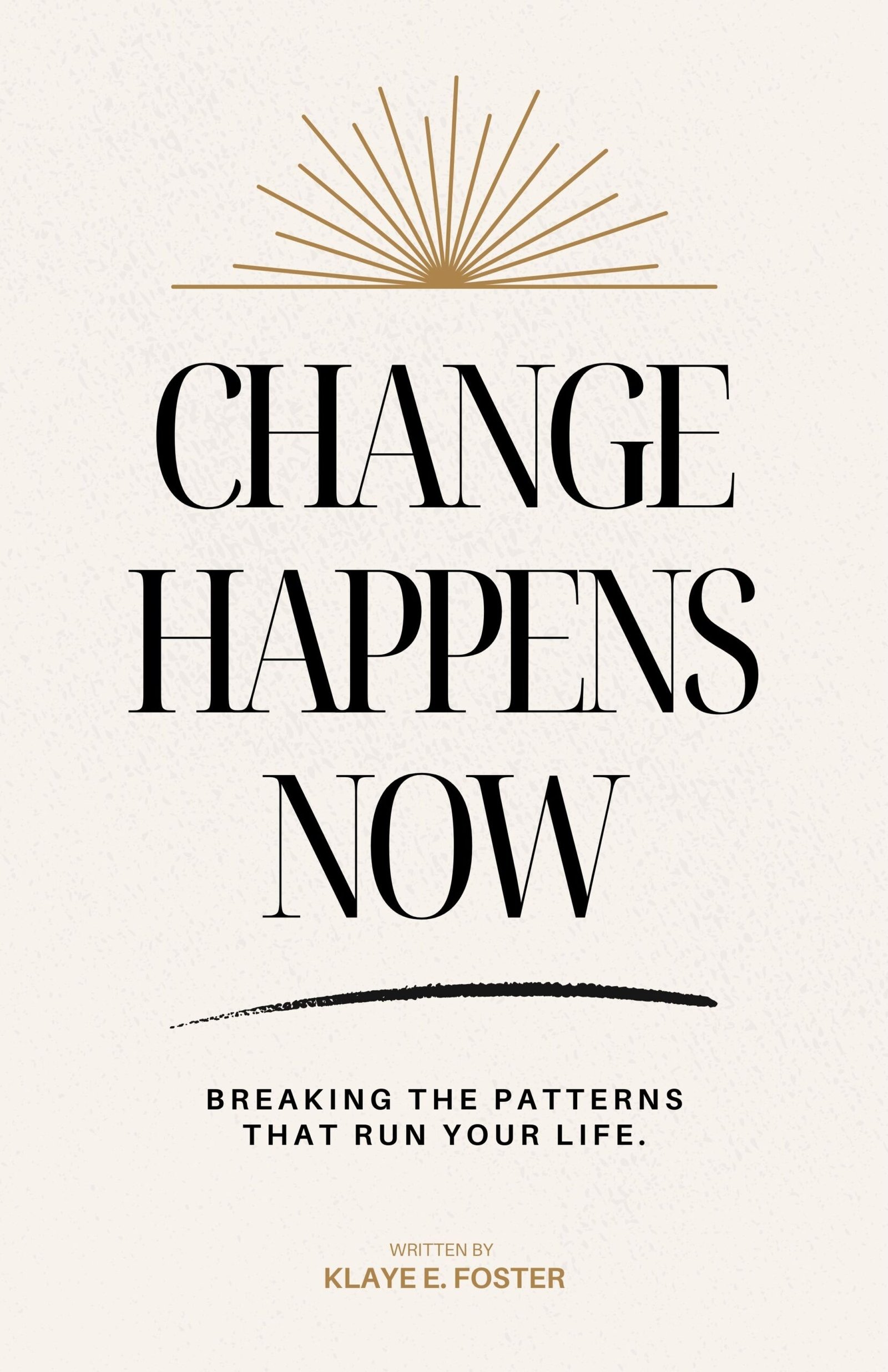
If you are on this path and you are looking for a structured way to work with who you are at a deeper level, Change Happens Now is where to start.