

The Truth Behind Why You Wait Until You Feel Ready (The Hidden Reason You Don’t Start)

Summary: Why You Wait Until You Feel Ready (The Hidden Reason You Don’t Start)
If you find yourself waiting until you feel ready before taking action, the reason is not weakness or lack of commitment. Understanding why you wait until you feel ready starts with one key insight: the brain is designed to seek certainty before committing to unfamiliar action, and readiness feels like the evidence of certainty it is looking for.
The problem is that clarity, confidence, and readiness are not conditions that arrive before action begins. In almost every meaningful case, they develop through action. When you wait for them to appear first, you delay the exact experience that would create them.
This is why people get stuck even when they understand exactly what they need to do.
In this post, we’ll explore:
- Why the brain seeks certainty before action and what that costs you
- The neuroscience of uncertainty and how it drives delay
- Why waiting to feel ready is not preparation but a form of avoidance
- The hidden cost of waiting and what readiness actually takes from you
- How clarity develops through action, not overthinking
- How to start before you feel ready and what changes when you do
People wait to feel ready because the brain interprets uncertainty as a signal to pause. The problem is that clarity and confidence are created through action, not before it, which is why waiting to feel ready keeps you exactly where you are.
“Until one is committed, there is hesitancy, the chance to draw back… The moment one definitely commits oneself, then Providence moves too.”
— William Hutchison Murray
Why the Mind Looks for Certainty Before Action
If you have read the other posts in this series, you already know that the brain prefers what is familiar and predictable. When something is well understood, the brain can process it efficiently and navigate it with less effort. When something is unclear, the brain has to work harder to anticipate what might happen, and that increased processing load registers as hesitation.
This is why the mind looks for certainty before taking action. It is not irrational. It is the brain doing exactly what it is designed to do: reduce the cost of navigating an uncertain situation by gathering more information before committing.
The difficulty is that this mechanism was designed for a world where most uncertainty signaled genuine risk. In modern life, the same system fires in response to starting a creative project, having a difficult conversation, or launching something new, situations where the danger is minimal but the unfamiliarity is real.
Daniel Kahneman’s research on cognitive systems describes this tension clearly. The brain’s fast, automatic system responds to unfamiliarity as friction. The slower, deliberate system knows the action is worth taking but still has to overcome the resistance the first system has already generated. Waiting to feel ready is often the fast system winning that negotiation indefinitely.
Why Waiting to Feel Ready Creates Delay
Waiting to feel ready feels like responsible behavior. It looks like preparation, patience, and careful thinking. From the inside, it is genuinely difficult to distinguish from genuine groundwork.
But in practice, waiting for readiness becomes a form of delay that is harder to interrupt precisely because it feels justified. The mind fills the waiting space with reasons that sound entirely reasonable: you need more clarity, more time, a better plan, a stronger foundation. None of those things are wrong to want. The problem is that they are used to postpone action rather than to support it.
Readiness gradually shifts from something that develops through experience into something that must be established before experience begins. That inversion is where the loop forms. The longer action is delayed, the more unfamiliar the situation remains. The more unfamiliar it feels, the more the mind continues searching for certainty. The search for certainty extends the delay. The delay increases the unfamiliarity. And around it goes.
This pattern is sometimes called analysis paralysis: the state of being so focused on understanding and preparing that the understanding and preparation themselves become the activity, replacing the action they were supposed to support.
A Real World Example of Waiting to Feel Ready
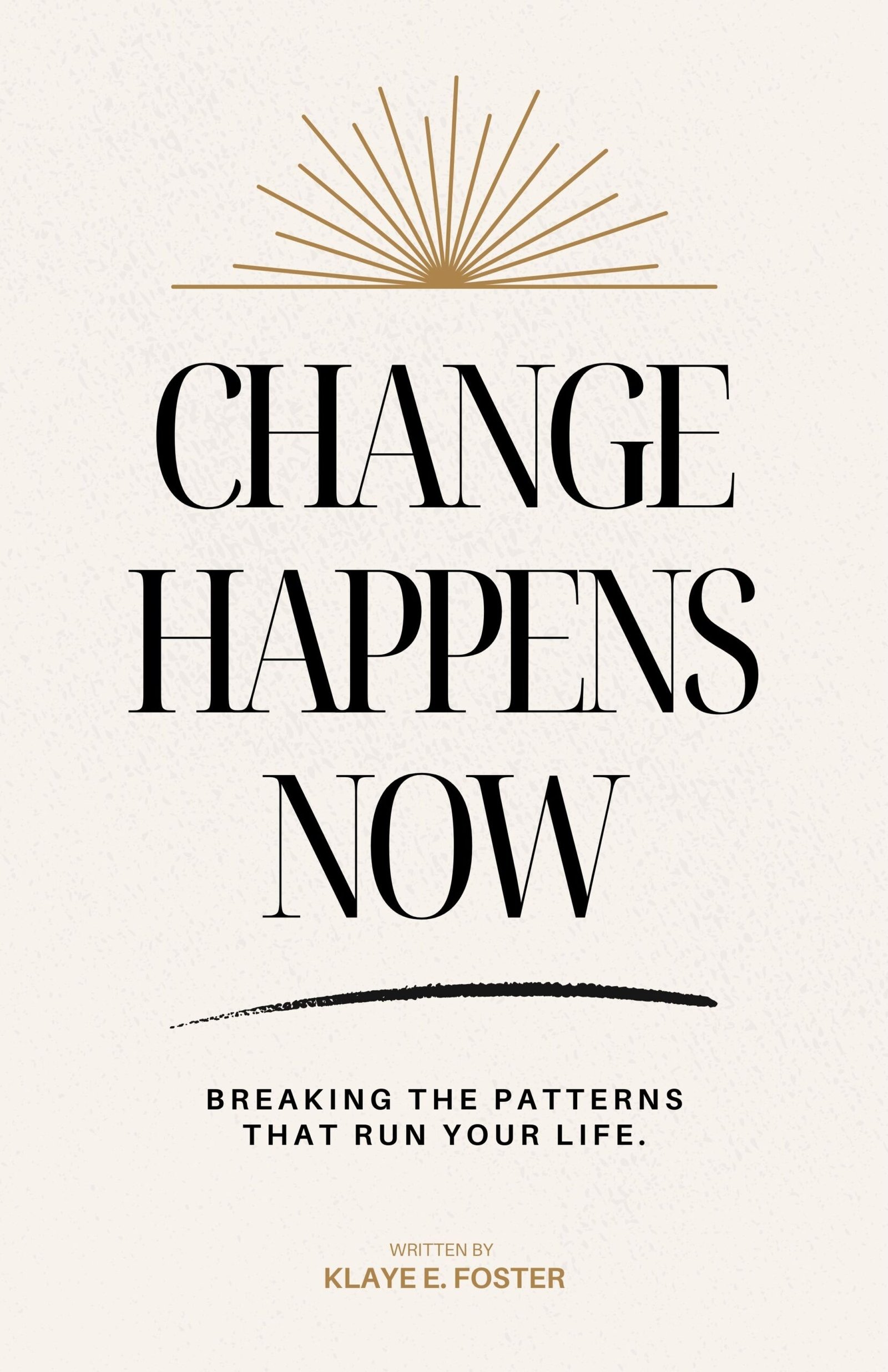
I sat on the idea for my book for a long time before I wrote a single word of it.
I told myself I was still developing the angle. Then I told myself I needed to read more first and think it through more thoroughly, make sure I actually had something worth saying before I committed it to the page. Every few months I would return to the document I had barely touched, add a few notes, and put it away again. Each time I did this it felt like progress. I was working on it. I was refining the idea.
What I was actually doing was waiting to feel like I already knew how to do something I had never done before.
The moment I started actually writing, even badly, even without a clear direction or a finished idea of what the book wanted to be, everything changed. Decisions that had felt impossible to make from the outside became obvious once I was inside the work. Chapters that I had planned before starting barely made it into the final version. The structure that emerged was not the one I had spent months imagining. It was one that could only have been found by starting.
The clarity I had been waiting for was sitting on the other side of beginning. I had spent over a year standing just outside the door.
This is the pattern. Someone has something they want to build, write, start, or say. They think about it regularly. They plan and refine the idea. They tell themselves they will begin when everything feels more certain. Time passes. Nothing begins. When they finally do take action, the clarity they were waiting for tends to appear almost immediately, not because the preparation finally paid off but because engagement with the actual thing produces information that no amount of thinking about it could generate.

The Neuroscience of Uncertainty and Starting
Uncertainty increases cognitive load in measurable ways.
When the brain cannot predict an outcome, it activates regions involved in decision-making and threat detection simultaneously, which slows response and increases hesitation. This is not a failure of willpower. It is a neurological response to incomplete information that the brain genuinely cannot distinguish from risk.
Research on action outcome learning shows that the brain updates its predictions most effectively through direct experience rather than through anticipation. When a step is taken and an outcome is observed, the brain registers that information and revises its model of the situation. The situation becomes more familiar. The prediction becomes more accurate. The cognitive load decreases.
In other words, the brain is better at learning about a situation by being in it than by thinking about it from the outside. This is why clarity tends to arrive after starting rather than before. The brain is simply doing what it does best: learning from direct feedback rather than from projection.
The Hidden Cost of Waiting: What Readiness Actually Takes From You
This is the part of the waiting conversation that most posts skip.
Waiting to feel ready does not just delay the start. It has an active cost that accumulates over the time you spend in the waiting room.
The first cost is skill development. Every week spent waiting is a week not spent building the competence that would actually create readiness. The book that was not written is also the writing practice that was not accumulated. The business that was not started is also the market understanding that was not developed. Waiting for readiness postpones the only activities that build it.
The second cost is momentum. Starting creates forward motion that compounds. Each action produces information that makes the next action clearer. Each small completion raises the sense of capability. Each piece of feedback sharpens the direction. None of that is available to someone waiting to start. The compound growth that beginning creates can only begin when beginning does.
The third cost is identity. The longer a person waits to begin something, the more the gap between who they are now and who they imagine they need to be to start becomes part of how they see themselves. The story of “I am someone who is almost ready” can become surprisingly durable, surviving years of good intentions without producing a single first step.
Tim Harford, in his work on the counterintuitive advantages of messy beginnings, describes how the pressure for perfect preparation often produces worse outcomes than starting imperfectly and adjusting in real time. The cost of the messy start is visible and uncomfortable. The cost of continued waiting is invisible and cumulative. We tend to overweight the first and undercount the second.
Why Clarity Comes After You Start
Clarity is almost universally treated as a prerequisite for action. In practice it is almost universally a product of it.
When you begin, you receive feedback. You see what works and what does not, what the thing actually wants to be rather than what you imagined it would be from a distance. That feedback refines your understanding in a way that no amount of prior thinking can replicate because it is grounded in the actual situation rather than in a projection of it.
Looking back at the book, almost nothing about the final version matched what I had imagined from the outside. The structure changed. The tone found itself. Chapters I assumed would be central barely made it in. All of that could only have been discovered by being inside the work, not by continuing to plan from outside it.
This is why waiting for complete clarity tends to extend the delay indefinitely. The clarity being waited for is a product of the action that has not yet been taken. You cannot acquire it from the outside. You can only encounter it by beginning.
How to Take Action Without Feeling Ready
Starting before you feel ready does not mean acting recklessly or without any direction. It means accepting that not everything can be understood before you begin, and choosing to work with what you already know rather than waiting for what you do not yet have.
The shift is from asking “am I ready?” to asking “am I willing to begin with what I currently understand?” That is a different question and it produces a different answer. Almost everyone has enough to take a first step. Almost no one has everything they would need to feel fully ready.
Practically, this means identifying the smallest possible first action that moves in the right direction and doing only that. Not the whole thing. Not a plan for the whole thing. The first genuine step. The research on cognitive load and decision making consistently shows that breaking the inertia of not starting is the most costly part of the process. Once motion exists, continuation is significantly easier than initiation.
The book that eventually existed began with a single session of writing something real rather than planning something imaginary. That session did not produce anything usable. It produced the knowledge that starting was survivable, which was the only information I actually needed to continue.
Where This Fits in The Change System
Up to this point in the system, the focus has been on understanding internal patterns, adjusting direction, building stable behavior, and creating the conditions that support it. This is where those patterns are tested in situations that are not yet familiar or predictable.
Movement without certainty is what allows the system to function beyond controlled conditions. It is what turns internal alignment into real-world progress. Without it, everything stays in rehearsal indefinitely. With it, the work that has been done internally begins to produce something visible.
Frequently Asked Questions
Why do I keep waiting until I feel ready?
Because the brain interprets unfamiliarity as a signal to gather more information before committing. Readiness feels like the evidence of sufficient certainty. The problem is that the kind of certainty the brain is looking for only develops through engagement with the actual situation, not through continued preparation from outside it.
Is waiting to feel ready the same as procrastination?
They overlap significantly. Both involve delaying action that is understood to be worth taking. Waiting for readiness is often a more sophisticated form of avoidance because it feels constructive. The planning, the research, and the refining feel like progress. They are not the same as starting.
How do I start when I have no idea what I’m doing?
By identifying the smallest possible first action and doing only that. You do not need a complete understanding of the whole thing to take the first step. The first step produces information that makes the second step clearer. That sequence is not available to someone still waiting to begin.
Does confidence come before action or after?
Almost always after. Confidence in a specific domain develops through repeated engagement with that domain. It is built from accumulated evidence of capability, and that evidence can only be gathered through action. Waiting for confidence before acting inverts the process and makes it impossible.
What is analysis paralysis?
Analysis paralysis is the state of being so focused on understanding and preparing that the understanding and preparation become the activity, replacing the action they were meant to support. It feels productive because thinking and planning are real work. The distinguishing feature is that no decision is ever made and no action is ever taken, regardless of how much analysis accumulates.
How do I know when I have prepared enough?
When you have enough information to take the next step, not the whole journey, just the next step. Perfect preparation is not a threshold that exists. There is always more that could be known. The practical question is whether you have enough to begin and adjust, which is almost always yes well before it feels like it.
Why does clarity appear after starting?
Because the brain learns most effectively through direct feedback rather than through anticipation. When you engage with the actual situation, you receive information that no amount of thinking about it from the outside can generate. The clarity arrives because you are now in contact with the real thing rather than your projection of it.
Can waiting too long actually make starting harder?
Yes. The longer action is delayed, the more the gap between where you are and where you imagine you need to be tends to grow. The situation becomes increasingly weighted with expectation. Starting a year after you first planned to begins to carry the additional cost of explaining the delay to yourself. Starting today, imperfectly, does not.
Final Thoughts
Readiness is not a feeling that arrives when conditions are right. It is a state that develops through doing the thing you are waiting to feel ready for. Every day spent waiting for it is a day that could have been spent building it. The first step does not require certainty. It requires only the willingness to find out what happens when you take it. What happens, almost without exception, is that the next step becomes clearer than it was before. And that is enough to continue.
“Until one is committed, there is hesitancy, the chance to draw back… The moment one definitely commits oneself, then Providence moves too.” — William Hutchison Murray
William Hutchison Murray was a Scottish mountaineer and writer whose most famous expedition was the 1951 Scottish Himalayan Expedition. This passage, from the introduction to his book about that expedition, is often quoted but rarely given its full context. Murray was not writing about motivation or positive thinking. He was writing about what physically happens when a decision is made and followed through. New resources appear. New connections form. New paths become visible. The act of committing changes the landscape of what is possible in ways that deliberation alone cannot.
Note:
This post is part 8 of the “Alignment Series”. To see the rest of the series check out the next post “Why You Stop When You Don’t See Results (The Point Where Most People Quit)“, or start from the beginning with “How to Be More Aware of Your Thoughts and Stop Living on Autopilot”